Why Your Lower Back Hurts Gaming (and How to Fix It)
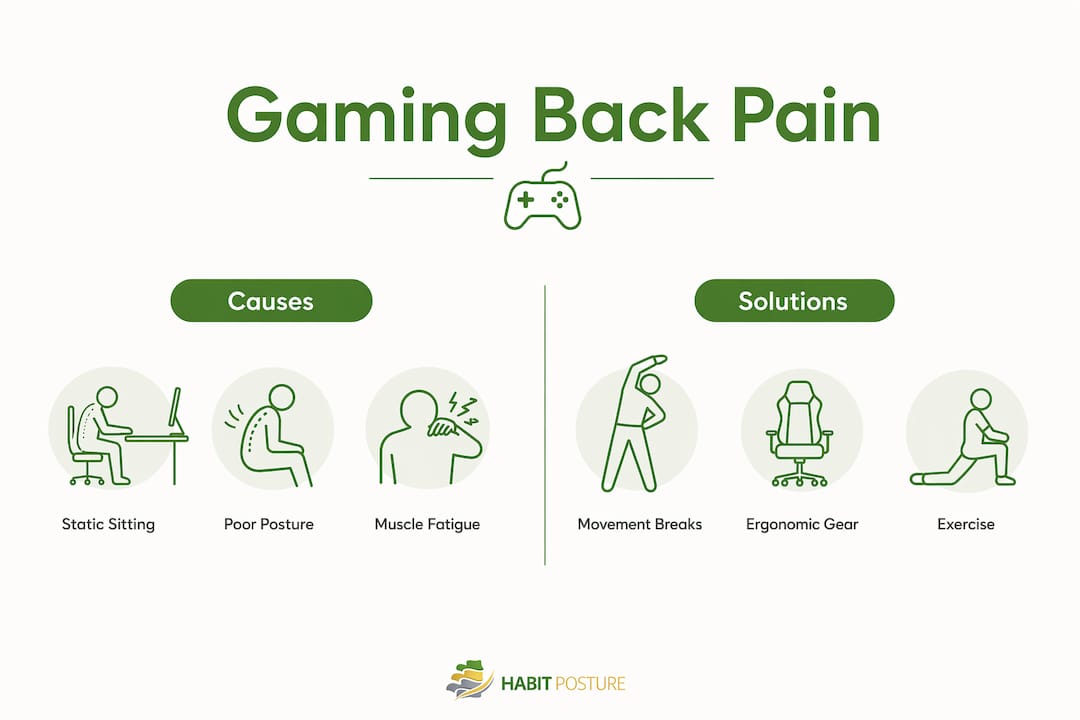
Lower back pain during gaming is defined as musculoskeletal discomfort caused by prolonged static sitting, spinal disc compression, and progressive muscle fatigue. 73% of esports players experience pain within one year of competitive play, with the spine ranking as the most affected region. That number tells you this is not a fringe problem. If you are grinding ranked matches or sitting through long sessions and your lower back starts screaming at you, the cause is almost always mechanical, and it is fixable.
Why lower back hurts gaming: the biomechanical truth
The clinical term for what gamers experience is lumbar mechanical pain, a category of musculoskeletal dysfunction driven by load, posture, and fatigue rather than injury or disease. Understanding the mechanics is the fastest path to relief.
Lumbar intradiscal pressure during unsupported sitting runs 30–40% higher than it does while standing. Your spinal discs are absorbing more force every minute you sit than they would if you were on your feet. Over a two-hour session, that compressive load accumulates and begins to fatigue the surrounding muscles that normally share the burden.
Gaming posture adds a specific layer of stress that typical office sitting does not. Biomechanical mapping of esports players shows that sustained isometric muscle activity under visual and motor demands creates a distinct mechanical discomfort pattern. Your eyes are locked on the screen, your hands are executing precise inputs, and your core is braced without you realizing it. That constant low-level tension is what separates gaming back pain from regular desk fatigue.
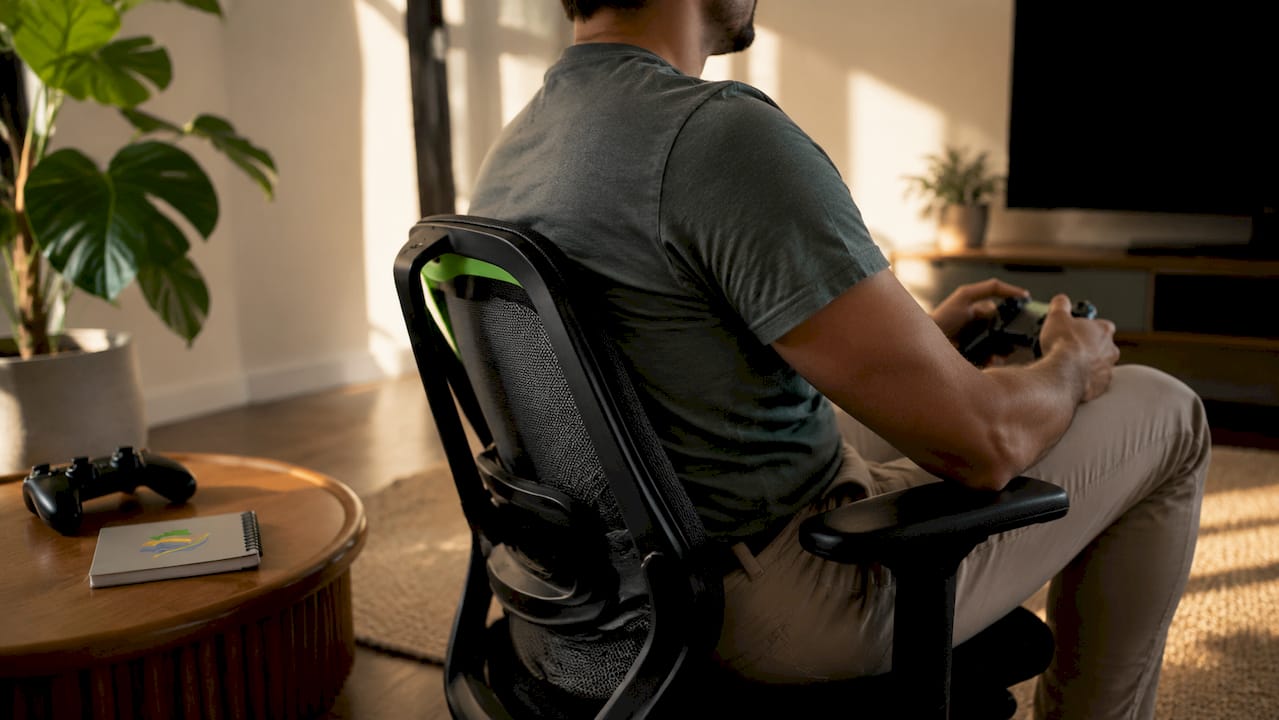
Static posture also limits blood flow to spinal tissues. Pain during sitting worsens cumulatively over one to two hours as circulation drops and nerve endings become sensitized. This is why you might feel fine at the one-hour mark and then suddenly stiff and sore by hour three.
Key causes at a glance:
- Increased lumbar disc pressure from sustained seated posture
- Isometric muscle tension from gaming-specific visual and motor demands
- Reduced circulation leading to tissue sensitization over time
- Pelvic tilt changes that shift load onto passive spinal structures
- Lack of position variation keeping the same muscles under constant load
Pro Tip: Set a phone timer for 45 minutes. When it goes off, stand up, roll your shoulders back, and take five deep breaths. That micro-reset costs you less than 30 seconds and interrupts the fatigue cycle before it builds.
Do gaming chairs actually prevent lower back pain?
The short answer is: not reliably, and often not at all. Gaming chairs frequently prioritize aesthetics over true biomechanical load redistribution. The adjustable armrests, reclining backrests, and racing-style bucket seats look purposeful. The problem is that many of those adjustable components do not meaningfully change how pressure distributes across your lumbar spine and pelvis.
Here is a direct comparison of what gaming chairs and ergonomic office chairs typically deliver:
| Feature | Gaming chair | Ergonomic office chair |
|---|---|---|
| Lumbar support | Fixed pillow, often misaligned | Adjustable built-in lumbar curve |
| Seat depth adjustment | Rarely available | Standard on quality models |
| Backrest angle | Wide recline range | Moderate recline with tension control |
| Pelvic support | Bucket shape tilts pelvis backward | Flat or forward-tilting seat pan |
| Pressure redistribution | Limited by fixed foam | Designed around spinal load data |
| Long-session performance | Degrades with foam compression | Maintains support over hours |
The bucket seat shape common in gaming chairs is the biggest culprit. It encourages a posterior pelvic tilt, which flattens your lumbar curve and pushes load onto the discs rather than the muscles and bones designed to share it. An ergonomic office chair with a properly adjusted lumbar support keeps your pelvis in a neutral position, which reduces disc pressure significantly.
Chair adjustments alone cannot prevent cumulative fatigue during prolonged gaming. Even a well-fitted ergonomic chair cannot override the physics of static loading. The chair is one variable. Movement frequency, session length, and core strength are the others.
How do movement breaks prevent lower back pain after gaming?
Movement breaks are the single most underused tool for managing gaming-related lower back discomfort. Even good posture fails if position changes and breaks are not taken regularly during a session. The reason is straightforward: muscle fatigue accumulates regardless of how well you are sitting if you never change the load pattern.
Micro-movement breaks intermittently unload spinal discs and reset muscle activation. Biomechanical research on esports players confirms that brief positional changes prevent the fatigue cascade that leads to pain. You do not need to leave your desk for a full workout. You need to shift the load.
A practical movement protocol for gamers looks like this:
- Every 30–45 minutes: Stand up, extend your hips forward, and hold for 10 seconds. This counters the hip flexor shortening that pulls your pelvis into a backward tilt.
- Every 60 minutes: Do 10 slow cat-cow movements on the floor or in your chair. This cycles your lumbar spine through flexion and extension, pumping fluid back into the discs.
- Every 90 minutes: Take a two-minute walk. Even pacing around your room reactivates the glutes and resets spinal loading patterns.
- Between matches or loading screens: Shift your weight from one sit bone to the other. This small movement changes which muscles are under load and gives the fatigued side a brief recovery window.
Pro Tip: Use in-game loading screens as your movement cue. Every time a map loads or a cutscene plays, stand up and do a hip flexor stretch. You are already waiting. Use that time.
A critical nuance: early symptoms often do not appear during gaming but accumulate and worsen after sessions end. Many gamers dismiss the warning signs because they feel fine mid-session. The stiffness that hits when you finally stand up is the delayed signal of hours of accumulated load.
Which exercises actually help with gaming back pain?
Exercise is the most evidence-supported treatment for lower back discomfort in gamers and desk-bound individuals. Most lower back pain improves with conservative management, and exercise sits at the center of that approach. The key is choosing the right type and sticking with it.
Clinician-directed exercise adherence significantly improves lower back pain outcomes compared to low adherence. Doing the exercises occasionally does not work. Consistency tied to the American College of Sports Medicine (ACSM) recommendations is what produces real change.
The exercise categories with the strongest evidence for gaming-related back pain:
- Aerobic exercise: Walking, cycling, or swimming for 20–30 minutes three to five times per week. Aerobic activity improves circulation to spinal tissues and reduces overall pain sensitivity.
- Core strengthening: Exercises like dead bugs, bird dogs, and planks build the deep stabilizing muscles that reduce disc load during sitting. These are not about six-pack aesthetics. They are about spinal endurance.
- Pilates and motor control training: These approaches retrain the timing and coordination of deep spinal muscles. Directional preference treatment improves outcomes by matching exercises to your specific pain pattern rather than applying a generic routine.
- Hip flexor and thoracic mobility work: Tight hip flexors from prolonged sitting pull the pelvis forward or backward depending on your posture pattern. Stretching these daily reduces the mechanical stress transferred to the lumbar spine.
- Spinal extension exercises: For gamers who sit in a flexed posture, McKenzie-style extension movements can provide rapid relief by reversing the disc pressure pattern.
Passive tools like lumbar support pillows and heating pads have a role in short-term comfort. They do not build the tissue resilience that prevents recurrence. Active rehabilitation is the long-term answer.
Key Takeaways
Lower back pain in gamers is caused by static spinal loading, poor pelvic position, and muscle fatigue, and it is best managed through ergonomic adjustments, regular movement breaks, and consistent exercise.
| Point | Details |
|---|---|
| Disc pressure increases when seated | Lumbar intradiscal pressure runs 30–40% higher sitting than standing, accumulating over hours. |
| Gaming posture is uniquely demanding | Sustained isometric tension under visual and motor demands creates pain patterns distinct from regular desk sitting. |
| Gaming chairs often fall short | Many gaming chairs tilt the pelvis backward and fail to redistribute spinal load effectively. |
| Movement breaks are non-negotiable | Shifting position every 30–45 minutes interrupts the fatigue cycle that causes post-session pain. |
| Exercise adherence drives recovery | Consistent, targeted exercise matched to your symptom pattern outperforms passive treatments every time. |
What most gamers get wrong about back pain
The most common mistake I see is treating back pain as a gear problem. A new chair gets ordered, the lumbar pillow gets adjusted, and the session length stays at six hours. The pain comes back within a week. That cycle repeats until the gamer either accepts chronic discomfort or finally addresses the root cause.
The uncomfortable truth is that gaming back pain is primarily a movement deficiency problem, not an equipment problem. The research on biomechanical demands of esports makes this clear. The sustained isometric demands of gaming create a fatigue pattern that no chair can fully offset. Equipment helps. Movement is the fix.
Another thing most articles skip: the pain you feel after a session is not the same as the pain you feel during one. Delayed onset back pain is a signal that cumulative loading exceeded your tissue tolerance hours earlier. By the time it hurts, the damage is already done. Awareness during the session, not just after, is what prevents escalation.
One more thing worth saying plainly. If you develop bladder or bowel problems, progressive leg weakness, or numbness in the groin area alongside your back pain, stop gaming and seek emergency care. Cauda equina syndrome is rare but serious, and those symptoms require urgent MRI and medical intervention. Most gaming back pain is mechanical and benign. These symptoms are not.
— Thomas
Habitposture gear built for long sessions
Your back does not care how good your K/D ratio is. It responds to load, position, and time. Habitposture builds ergonomic seating designed specifically for people who spend hours in front of a screen, whether that is a gaming rig, a work setup, or both.

The Habitposture high-back ergonomic chair pairs adjustable lumbar support with a seat design that keeps your pelvis in a neutral position, reducing the disc pressure that builds up over long sessions. Pair it with the movement habits covered in this article and you have a real system, not just a piece of furniture. Posture is a habit. Habitposture makes it easier to build a good one.
FAQ
Why does my back hurt after gaming but not during?
Pain accumulates cumulatively during static sitting and often surfaces after the session ends when muscles finally release tension. The discomfort you feel post-session reflects load that built up over hours, not a sudden injury.
How long should gaming sessions be to avoid lower back pain?
No fixed session length guarantees pain prevention, but taking a movement break every 30–45 minutes significantly reduces cumulative spinal load. The total duration matters less than how often you change position within it.
Do gaming chairs help with lower back pain?
Many gaming chairs prioritize aesthetics over biomechanical support and can worsen pelvic tilt through their bucket seat design. A properly adjusted ergonomic chair with built-in lumbar support performs better for spinal health during long sessions.
What exercises help most with gaming-related lower back pain?
Core strengthening exercises like bird dogs and dead bugs, combined with hip flexor stretching and aerobic activity, address the root causes of gaming back pain. Exercise adherence matters more than the specific routine you choose.
When should a gamer see a doctor for back pain?
Seek urgent medical attention if back pain is accompanied by bladder or bowel dysfunction, progressive leg weakness, or groin numbness. These are red flag symptoms for cauda equina syndrome, a condition requiring emergency evaluation.