Why Posture Affects Mood in Gamers: 2026 Guide
Posture is a direct input to your brain’s emotional processing system, not just a physical habit. Research published in 2026 confirms that shifting to a more expansive body position improves mood and risk-taking even when you are not aware of the change. For gamers grinding long sessions, this means the way you sit is actively shaping how you feel, how fast you react, and how well you make decisions under pressure. Understanding why posture affects mood in gamers is the first step toward using your body as a performance tool, not just a chair filler.
Why posture affects mood in gamers: the science explained
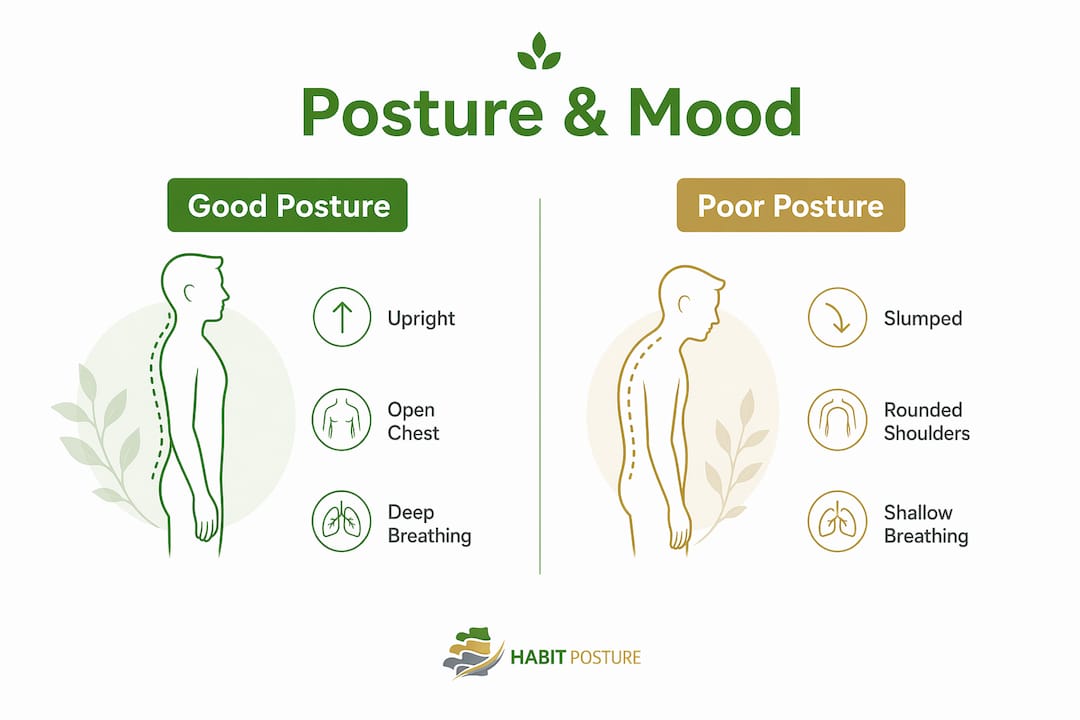
Posture influences mood through a mechanism called embodied cognition. The theory holds that your body does not just respond to your emotional state. It also sends feedback signals upward that shape how your brain processes emotion and makes decisions. Embodied cognition research confirms that upright seated posture acts as an active contributor to emotional state, not a passive reflection of it.
A 2026 PubMed study measured this effect using the Balloon Analogue Risk Task, a validated tool for assessing risk tolerance. Participants in more expansive postures showed better mood and higher risk-taking without being told to “power pose” or consciously adjust their mindset. That finding matters for gamers because it means posture works on your mood in the background, whether you notice it or not.
Northumbria University researchers found that holding an open versus slumped posture significantly affects judgment speed and memory of positive emotional words. Slumped posture biases the brain toward slower, more negative emotional processing. For a gamer interpreting a teammate’s callout or managing tilt after a bad round, that bias has real consequences.
“Posture not only changes how players feel but biases how they interpret and remember emotional content, impacting gaming tilt and emotional resilience.” — Northumbria University, 2026
The physiological feedback mechanism works like this: proprioceptors in your muscles and joints send position signals to the brain. When those signals say “collapsed, compressed, closed,” the brain’s emotional centers respond accordingly. Upright signals do the opposite. This is not motivation science. It is sensorimotor biology.
How gaming posture habits cause emotional shifts
Most gamers develop two predictable posture problems during long sessions: forward head posture and rounded shoulders. A 2026 randomized controlled trial found these deviations are common enough in monitor-based e-gamers that a corrective exercise program was specifically designed and tested for this population. Both deviations compress the chest, restrict breathing, and reduce blood flow to the brain.
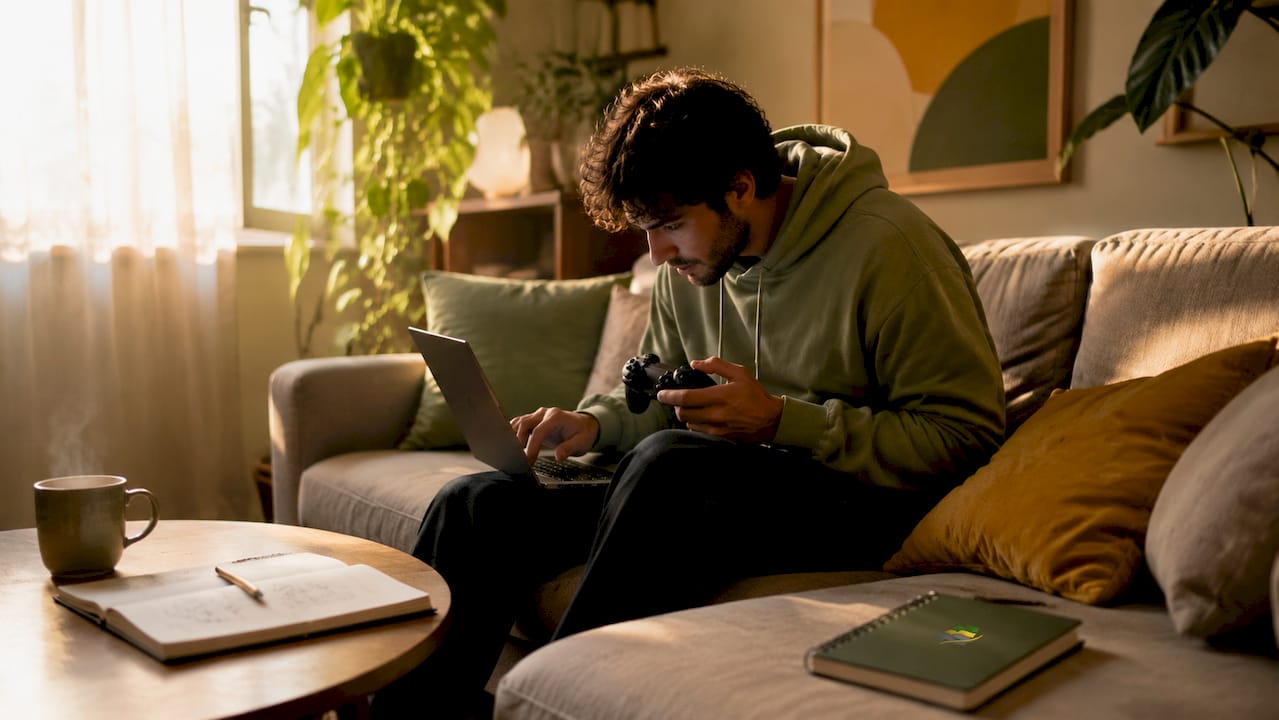
The timeline of physical change is faster than most gamers expect. A 2026 MDPI study on sedentary behavior found that physiological shifts like reduced skin temperature and lower muscle activity begin within the first hour of uninterrupted sitting. That is often before the second game of a ranked session is over.
Here is how the sequence typically unfolds during a long gaming session:
- Minutes 0–20: Posture is relatively upright. Mood and focus are stable.
- Minutes 20–40: Shoulders begin rolling forward. Neck drifts ahead of the spine. Breathing becomes shallower.
- Minutes 40–60: Muscle activity drops. Skin temperature falls. Fatigue signals begin reaching the brain.
- Hour 1+: Slumped posture is now the default. Emotional processing shifts toward negative bias. Tilt risk increases.
Gaming also engages complex bio-psychosocial pathways where posture-related discomfort interacts with stress and arousal to affect mood and executive function. This means the frustration you feel after a losing streak is not purely psychological. Your body’s physical state is feeding into that emotional spiral.
| Posture state | Physical effect | Mood effect |
|---|---|---|
| Upright, open | Full breathing, good circulation | Positive bias, higher confidence |
| Rounded shoulders | Compressed chest, reduced oxygen | Increased fatigue, lower resilience |
| Forward head | Neck strain, restricted blood flow | Irritability, slower reaction time |
Pro Tip: Set a phone timer for 45 minutes. When it goes off, roll your shoulders back, lift your chest, and take three deep breaths before the next game. This resets both your posture and your nervous system before fatigue compounds.
What corrective strategies actually improve posture and mood
The most effective approach treats posture correction as skill acquisition, not a passive reminder. A 2026 randomized controlled trial showed that a Comprehensive Corrective Exercise Program (CCEP) improved forward head posture and rounded shoulders in e-gamers within just four weeks. The program targeted the specific muscle imbalances that monitor-based gaming creates. Passive reminders like phone alerts help short-term, but retraining baseline alignment produces lasting change.
Ergonomic equipment plays a supporting role. An ergonomic gaming chair with proper lumbar support reduces the muscular effort required to stay upright. Less effort means less fatigue, which means posture holds longer into a session. Upright posture sharpens confidence and focus, which directly supports mood and performance during gaming.
Posture correctors serve a different function. They provide proprioceptive feedback, reminding your muscles what the correct position feels like. Over time, that feedback retrains the automatic patterns your body defaults to under fatigue. A posture corrector with lumbar support worn during sessions builds the habit without requiring constant conscious attention.
Here are the most practical posture strategies for gamers:
- Chair height: Feet flat on the floor, knees at roughly 90 degrees. Hips should sit slightly higher than knees.
- Monitor distance: Screen at arm’s length, top of the monitor at or just below eye level. This prevents forward head drift.
- Lumbar support: Use a chair or cushion that supports the natural curve of your lower back. This keeps the spine from collapsing into a C-shape.
- Shoulder position: Shoulders back and down, not hunched toward the ears. Keyboard and mouse positioned so elbows stay close to the body.
- Break frequency: Stand or stretch every 45–60 minutes. Even 90 seconds of movement resets muscle activity levels.
Pro Tip: If you are not ready for a full corrective exercise program, start with one daily set of wall angels. Stand with your back flat against a wall and slowly raise and lower your arms. This single exercise counteracts the exact muscle pattern that gaming creates.
Does posture affect gamer performance and decision-making?
Slumped posture reduces nervous system efficiency, slows reflexes, and lowers decision accuracy during high-stakes gaming moments. Posture directly impacts reflex speed and fatigue accumulation in competitive play. In a clutch round where a split-second decision determines the outcome, a compressed spine and restricted breathing are measurable disadvantages.
The mood connection runs deeper than most gamers realize. Posture biases how you interpret emotional content, including the in-game events you experience as threatening or manageable. A player in a slumped position is more likely to read a difficult situation as hopeless and more likely to tilt. A player sitting upright processes the same situation with greater emotional resilience.
Confidence is also a direct output of posture. Upright posture activates the kind of physiological state associated with readiness and control. That state feeds back into decision-making, making calculated risks feel more accessible. The 2026 PubMed study measured this effect directly: expansive posture increased risk-taking behavior without any conscious mental effort from participants.
The practical implication is clear. Before a ranked match or a tournament set, your physical setup is part of your mental preparation. Sitting upright is not a comfort choice. It is a performance input.
Key takeaways
Posture directly shapes mood, emotional processing, and decision-making in gamers through embodied cognition and physiological feedback, making upright alignment a concrete performance variable, not a wellness afterthought.
| Point | Details |
|---|---|
| Posture changes mood automatically | Expansive posture improves mood and risk-taking even without conscious awareness. |
| Physiological shifts start fast | Muscle activity and skin temperature drop within the first hour of sitting. |
| Slumped posture biases emotion | Rounded shoulders slow emotional processing and increase tilt risk during gaming. |
| Corrective exercise works quickly | A structured program improved gamer posture measurably within four weeks. |
| Upright posture boosts performance | Confidence, focus, and reflex speed all improve with better spinal alignment. |
The most underrated performance variable in gaming
Most gamers obsess over peripherals, ping, and practice hours. Posture sits at the bottom of the optimization list, if it appears at all. That is a significant missed opportunity.
What I find most compelling about the 2026 research is that posture affects mood without you noticing. You do not need to feel uncomfortable for the effect to kick in. You just need to be slumped, and your brain quietly shifts toward a more negative, less confident emotional baseline. By the time you notice you are tilting, the physiological process has been running for an hour.
The corrective exercise research is equally underappreciated. Four weeks to measurably improve forward head posture and rounded shoulders is a short timeline. Most gamers spend more time than that grinding a single rank tier. Spending a fraction of that effort on posture retraining would produce returns that show up in every session afterward.
The combination I keep coming back to is simple: ergonomic support to reduce the effort of staying upright, plus a short daily exercise routine to retrain baseline alignment. Neither requires a gym membership or a medical appointment. Both produce changes that compound over time. Posture is a habit. The gamers who treat it that way gain an edge that their opponents are not even looking for.
— Thomas
Habitposture gear built for gamers who sit for hours
Long sessions demand more than a decent chair. Your posture setup should work with you, not against you.
Habitposture builds gear specifically for people who spend 8+ hours at a screen. The ergonomic gaming chair with footrest keeps your spine supported through hour four the same way it does in hour one. The adjustable posture corrector gives your muscles the feedback they need to relearn good alignment without a bulky brace or a guilt trip. No lectures. No complicated systems. Just gear that fits your real life and helps your body build the habits that actually stick. Wear it. Fix it. Master it.
FAQ
Does posture really affect mood during gaming?
Yes. Research confirms that expansive posture improves mood and increases positive risk-taking behavior, while slumped posture biases emotional processing toward negative outcomes. The effect occurs even without conscious awareness.
How quickly does bad posture affect a gaming session?
Physiological changes including reduced muscle activity and lower skin temperature begin within the first hour of uninterrupted sitting. Mood and fatigue effects follow shortly after.
Can fixing posture improve in-game performance?
Upright posture sharpens focus, confidence, and reflex speed, all of which directly affect decision-making and reaction time in competitive gaming. Slumped posture reduces nervous system efficiency and slows responses.
What is the fastest way to correct gaming posture?
A structured corrective exercise program targeting forward head posture and rounded shoulders showed measurable improvement in e-gamers within four weeks. Pairing daily exercises with ergonomic chair support produces the fastest results.
Does a posture corrector help with gaming mood?
A posture corrector provides proprioceptive feedback that helps muscles relearn correct alignment. Over time, this reduces the automatic slumping that triggers fatigue and negative mood shifts during long sessions.