Why Desk Professionals Need Posture Gear in 2026
Posture gear is defined as any wearable or structural device that supports spinal alignment and encourages correct muscle engagement during prolonged sitting. If you spend eight or more hours at a desk, your spine is under constant load, and your postural muscles fatigue long before your workday ends. That is exactly why desk professionals need posture gear: without active support, the body defaults to slouching, which compresses spinal discs and strains the neck, shoulders, and lower back. Tools like posture-feedback wearables, corrective braces, and structured seat supports each address a different layer of this problem. The right gear does not fix your posture for you. It reminds your body what good posture feels like until that position becomes habit.
Why desk professionals need posture gear: the spinal case
Posture gear directly reduces the physical damage caused by prolonged sitting by supporting the spine’s natural curves and stabilizing pelvic positioning. Without pelvic support, the lumbar spine cannot maintain its neutral curve, and lumbar support alone fails to prevent slouching. That single biomechanical fact explains why so many desk workers feel back pain even in chairs marketed as ergonomic.
The research on posture-feedback devices is specific. A study of 165 office professionals found that consistent device use significantly improved posture angle and reduced slumped posture duration within four weeks (p < .001). Four weeks is a short window. That means measurable change is achievable within a single month of consistent use.
Corrective braces show similar results over longer periods. A 2018 longitudinal study found that braces combined with physical activity reduced neck, shoulder, and back fatigue across 6–12 months of use. The key phrase is “combined with physical activity.” Gear alone produces results, but gear paired with movement produces lasting ones.
Here is how posture gear compares to common alternatives:
| Support type | Spinal alignment benefit | Duration of effectiveness | Key limitation |
|---|---|---|---|
| No support | None | N/A | Full muscle fatigue by midday |
| Soft foam cushion | Low | Degrades within minutes of use | Loses structure quickly |
| Structured seat support | High | Sustained across full workday | Requires correct positioning |
| Corrective brace | High | Effective during wear | Risk of dependency if overused |
| Posture-feedback wearable | Moderate to high | Builds habit over 4+ weeks | Requires consistent daily use |
The gap between a soft foam cushion and a structured seat support is not subtle. Soft foam cushions fail to maintain support after brief use, while rigid structural frames sustain pelvic and lumbar alignment across an entire session. That difference matters when you are sitting for six hours straight.
Key benefits of posture gear for desk professionals include:
- Reduced neck and shoulder tension within weeks of consistent use
- Maintained lumbar curve during extended sitting sessions
- Faster muscle memory development for correct spinal positioning
- Lower cumulative spinal load across the workday
- Decreased fatigue and discomfort by late afternoon
What types of posture gear work best for desk workers?
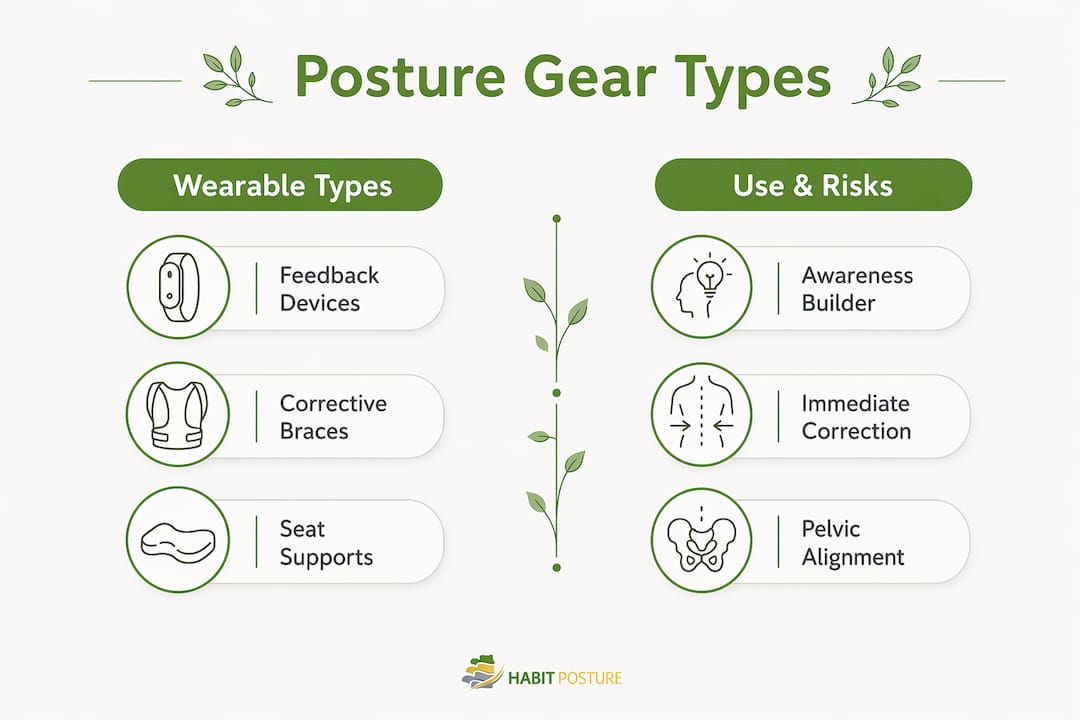
Three main categories of posture gear serve desk professionals, and each one fits a different need and work style.
Posture-feedback wearables are small clip-on or adhesive devices worn on the upper back or chest. They vibrate when you slouch past a set threshold. Brands like Upright GO use this approach. These devices are best for desk workers who lose awareness of their posture during focused work. They train habit rather than provide structural support.
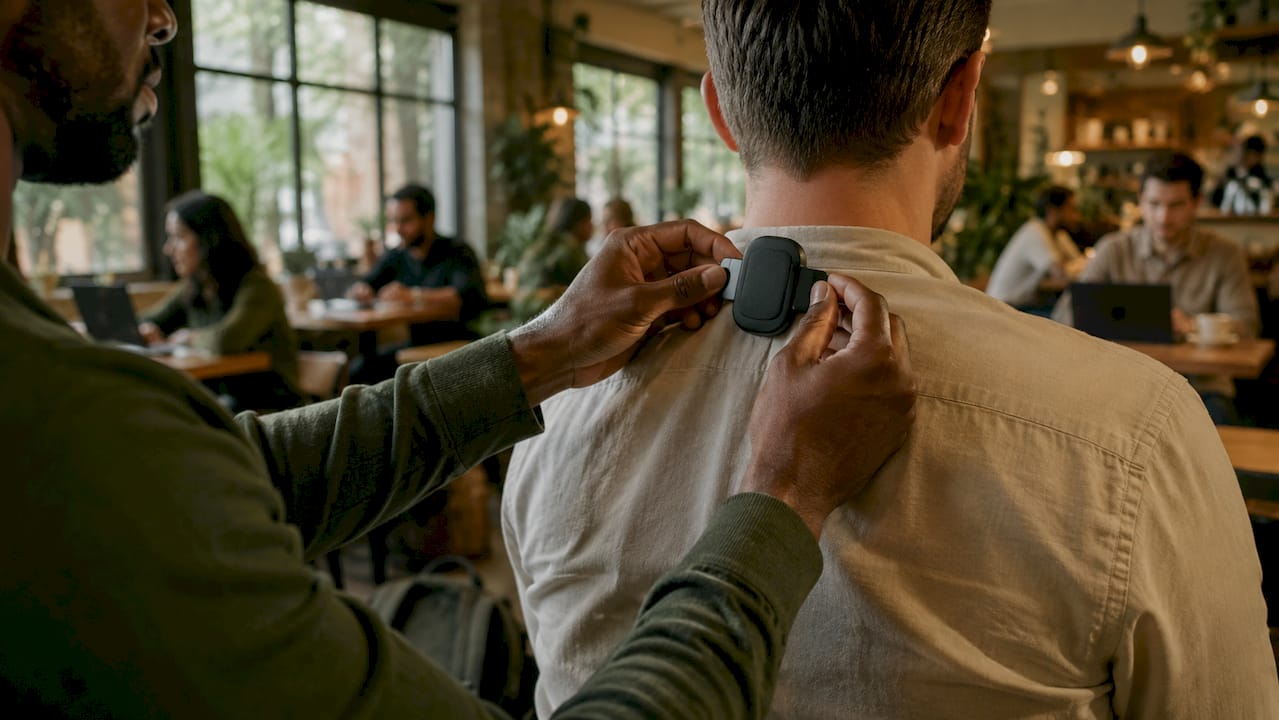
Corrective braces wrap around the shoulders and upper back to physically pull them into alignment. They provide immediate structural support and are most useful during recovery from strain or during high-load work periods. The tradeoff is real: prolonged brace use without muscle engagement can lead to muscle weakening and dependency. Physical therapists recommend wearing braces for no more than one to two hours at a time, with active movement in between.
Structured seat supports address the foundation of posture: the pelvis. Products like Postura use a rigid frame to guide spinal alignment actively rather than passively cushioning. This approach, sometimes called the Leverage Effect, works by stabilizing the pelvis so the lumbar spine can maintain its natural curve without effort. These supports are ideal for full-day desk use because they do not degrade the way foam does.
| Gear type | Best use case | Recommended duration | Main risk |
|---|---|---|---|
| Posture-feedback wearable | Building long-term posture habits | Full workday, as needed | Notification fatigue |
| Corrective brace | Short-term support and recovery | 1–2 hours per session | Muscle dependency |
| Structured seat support | Full-day spinal alignment | All-day use | Incorrect positioning |
Pro Tip: Start with a posture-feedback wearable if you are new to posture gear. It builds awareness without creating physical dependency, and you can layer in a structured seat support once you understand your baseline posture patterns.
How to integrate posture gear with ergonomics and movement
Posture gear is a tool, not a complete solution. The ergonomic approach to spinal health aims to reduce spinal loading systematically, and that requires combining gear with a properly configured workspace and regular movement.
Start with your chair and desk setup before adding any gear. Your feet should rest flat on the floor, your knees should sit at roughly a 90-degree angle, and your monitor should be at eye level. These adjustments reduce the baseline load your posture gear has to compensate for. Gear placed on top of a poorly configured setup will underperform.
Movement is non-negotiable. Breaking up sitting every 30–60 minutes with movement is as critical as using posture gear for maintaining spinal health, according to 2026 University of Utah Health recommendations. That is not a suggestion. Static posture, even correct posture, leads to muscle fatigue when held for hours without variation.
A practical daily routine for desk professionals looks like this:
- Set up your chair so your pelvis sits neutrally before adding any seat support or brace.
- Place your structured seat support or put on your corrective brace at the start of your session.
- Set a timer for 30–60 minutes. When it goes off, stand, walk, or stretch for two to three minutes.
- Do five to ten minutes of posterior chain exercises daily, such as rows, face pulls, or wall angels, to build the muscles posture gear supports.
- At the end of the day, remove your brace or wearable and spend five minutes in a gentle spinal decompression stretch.
Pro Tip: Posterior chain exercises like resistance band rows and face pulls directly strengthen the muscles that posture gear cues. Building that strength means you will need less gear over time, not more. Check out posture improvement without a gym for desk-friendly routines that take under ten minutes.
Dynamic adjustment of ergonomic setups prevents static fatigue more effectively than fixed configurations. Adjust your chair height, monitor angle, and gear positioning throughout the day rather than treating your setup as permanent.
What to avoid and common misconceptions about posture gear
The biggest mistake desk professionals make with posture gear is treating it as a permanent fix. Posture coach Heather Ippolito describes posture correctors as helpful reminders rather than solutions. That framing matters. A reminder works when you are present and engaged. A crutch creates dependency.
The dependency trap is real. Physical therapists consistently warn that overreliance on posture braces weakens the very muscles the gear is meant to support. If you wear a corrective brace for six hours a day without any active muscle engagement, your postural muscles get less work, not more.
A second major misconception is that posture is only about shoulders and upper back. Postural health is a full-body condition involving the head, neck, back, hips, and feet. Fixing shoulder position while ignoring hip tilt or foot placement leaves the root cause unaddressed.
Watch for these common pitfalls:
- Wearing a corrective brace for more than two hours without a movement break
- Choosing a soft foam cushion because it feels comfortable, when structural support is what your spine needs
- Ignoring pelvic tilt and focusing only on lumbar or shoulder alignment
- Using posture gear as a substitute for strengthening exercises
- Expecting results in days rather than the weeks that research actually shows
The softness of a cushion is not a measure of its support quality. Comfort and structural effectiveness are different things. A cushion that feels good in the first ten minutes may offer zero spinal support by the time you finish your second meeting.
Key Takeaways
Posture gear works best when combined with a properly configured ergonomic setup, regular movement breaks, and active strengthening of postural muscles.
| Point | Details |
|---|---|
| Gear supports, not replaces | Posture gear cues correct alignment but cannot substitute for muscle strength or movement. |
| Structural beats soft | Rigid seat supports maintain spinal alignment all day; foam cushions degrade within minutes. |
| Four weeks to results | Consistent use of posture-feedback devices shows measurable posture improvement within four weeks. |
| Move every 30–60 minutes | Regular movement breaks are as critical as gear use for preventing spinal strain. |
| Avoid dependency | Limit corrective brace use to 1–2 hours per session to prevent postural muscle weakening. |
Posture gear is a habit, not a hardware problem
I have watched desk professionals buy the most expensive ergonomic chair on the market, add a lumbar cushion, and still end up hunched by 3 PM. The gear was fine. The habit was missing.
What I have found is that posture is a dynamic process. Your body shifts, fatigues, and compensates throughout the day. No single device captures that reality. The desk workers who see real improvement are the ones who treat gear as a cue, not a correction. They use a wearable posture support to stay aware, pair it with a structured seat support for the long sessions, and build the posterior chain strength that makes good posture feel natural rather than forced.
The goal is not perfect posture at every moment. The goal is a body that defaults to better alignment over time. Gear accelerates that process. Movement and strength training lock it in. Expecting gear alone to do all the work is the same as expecting a fitness tracker to make you fit. The awareness it creates is real. The work still has to happen.
Set realistic expectations. Improvement takes weeks, not days. But the research is clear, and the path is straightforward. Start with one piece of gear, build the movement habit around it, and add strengthening exercises within the first month. That combination works.
— Thomas
Habitposture gear built for real desk work
Spending eight hours at a desk should not mean spending the evening in pain. Habitposture builds ergonomic posture supports for people who live at their screens, whether that is back-to-back Zoom calls, deep focus work, or long gaming sessions.
The gear is designed for all-day wear without the bulk of medical-grade braces. No guilt trips, no complicated setup. Slip it on, feel your posture shift, and let your body relearn what supported alignment feels like. Pair it with the posture habits guide for desk workers to get the full picture on combining gear with movement and ergonomic adjustments. Ready to feel the difference? Visit Habitposture to find the right support for your setup.
FAQ
What is posture gear and how does it help desk workers?
Posture gear includes wearable devices, corrective braces, and structured seat supports that guide spinal alignment during prolonged sitting. These tools reduce neck, shoulder, and back strain by supporting the spine’s natural curves and cueing correct muscle engagement.
How long does it take for posture gear to show results?
A study of 165 office professionals showed significant posture improvement within four weeks of consistent posture-feedback device use. Results depend on daily use and combining gear with movement and strengthening exercises.
Can posture gear cause muscle weakness?
Yes, if overused without active muscle engagement. Physical therapists recommend limiting corrective brace use to 1–2 hours per session and pairing any gear with posterior chain strengthening exercises to prevent dependency.
Is a lumbar cushion the same as a structured seat support?
No. Soft foam cushions lose their shape within minutes of use, while structured seat supports use rigid frames to maintain pelvic and lumbar alignment across a full workday. Structural support and cushion softness are not the same thing.
Do I need posture gear if I already have an ergonomic chair?
An ergonomic chair reduces baseline spinal load, but it does not actively cue muscle engagement or correct pelvic tilt. Posture gear adds a layer of active support and habit-building that chair design alone cannot provide.