Why Companies Invest in Ergonomic Chairs for ROI
Ergonomic chairs are specialized seats designed to support the body’s natural posture and reduce physical strain during prolonged sitting, making them a direct business tool for lowering injury risk and improving workforce productivity. The question of why companies invest in ergonomic chairs comes down to a measurable equation: healthier employees cost less and produce more. Work-related musculoskeletal disorders (MSDs) remain one of the leading causes of workplace absenteeism and workers’ compensation claims across office environments. When you factor in reduced injury claims, lower presenteeism, and stronger employee retention, the return on ergonomic seating is not a soft benefit. It is a hard business case.
Why companies invest in ergonomic chairs: the health and safety foundation
The core reason companies prioritize ergonomic seating is risk reduction. Monash University’s workplace safety guidelines identify adjustable seat height, stability, and curved seat fronts as standard design features that reduce ergonomic strain during sustained desk work. These are not comfort upgrades. They are injury prevention mechanisms built into the chair’s structure.
Musculoskeletal disorders develop gradually through cumulative load. Every hour an employee sits in a poorly designed chair, compressive and shear forces build in the lumbar spine. A 2026 MDPI study found that lumbar load reductions of approximately 14% in flexion-extension moment, 6% in compression force, and 10% in shear force are achievable with proper back support. That reduction, applied across an eight-hour workday and a full workforce, translates directly into fewer low back injury claims.
Key ergonomic chair features that address MSD risk include:
- Adjustable seat height to align thighs parallel to the floor and reduce hip flexor strain
- Lumbar support that maintains the natural inward curve of the lower spine
- Tilt mechanisms that allow dynamic posture shifts throughout the day
- Seat depth adjustment to prevent pressure behind the knees
- Armrests positioned to relieve shoulder and neck load
Pro Tip: Set seat height so your feet rest flat on the floor and your knees form a 90-degree angle before adjusting any other component. Monash University’s workstation guidance confirms the chair is the anchor point from which all other workstation dimensions are calibrated.
Ergonomic seating does not operate in isolation. The chair is one component of a broader workstation system that includes desk height, monitor position, and input device placement. Science-based office ergonomics research confirms that movement shifts combined with proper chair setup reduce cumulative strain more effectively than either intervention alone. The chair sets the foundation. Everything else follows.
What business benefits result from investing in ergonomic chairs?
The business case for ergonomic chairs is grounded in three measurable outcomes: reduced absenteeism, lower compensation costs, and improved productivity.
A 2019 cluster randomized trial cited in ergonomic program research showed approximately AU$99 per person per year improvement in monetized productivity when ergonomic chair upgrades were paired with physical ergonomic guidance. That figure represents only direct productivity gains. It excludes reductions in injury claims, turnover costs, and sick day expenses. The combined financial impact of a well-implemented ergonomic program is substantially higher.
“Comfortable ergonomic chairs reduce fatigue-related distraction, letting employees sustain focus and consistent performance throughout the workday.” — Buro Seating, 2026
Reduced presenteeism is one of the most underestimated advantages of ergonomic chairs for employee wellness. An employee working through chronic back pain is physically present but cognitively compromised. Better chair comfort leads to reduced shifting and delayed fatigue, which sustains output consistency across the full workday rather than just the morning hours.
| Business benefit | What the evidence shows |
|---|---|
| Productivity improvement | AU$99 per person per year gain with structured ergonomic programs |
| Lumbar load reduction | Up to 14% reduction in spinal flexion-extension moment with proper support |
| Fatigue reduction | Ergonomic comfort delays physical fatigue and reduces distraction-driven errors |
| Compliance risk reduction | DSE regulations require employer-led ergonomic assessments and risk controls |
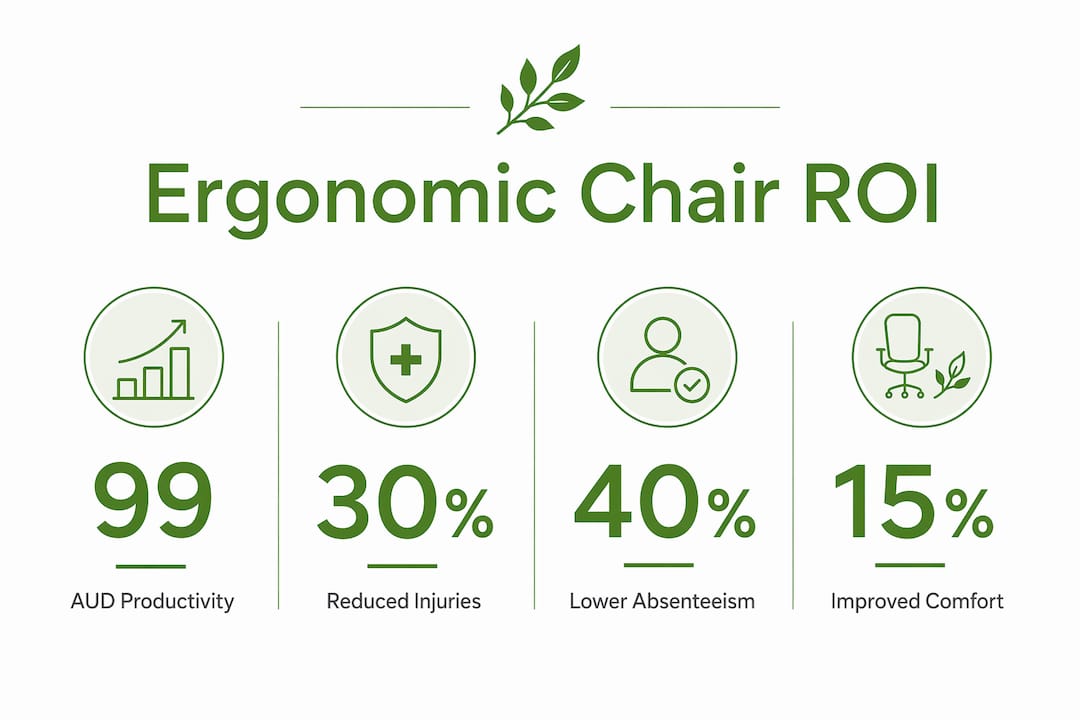
UK Display Screen Equipment (DSE) Regulations place a legal duty on employers to assess and reduce ergonomic risks for screen-based workers. Non-compliance creates regulatory exposure on top of the direct health costs. Ergonomic chair investment is therefore both a risk management decision and a legal compliance measure for most office-based organizations.
How ergonomic chairs reduce health risks and improve workplace safety
Understanding the mechanics of ergonomic seating helps HR managers make procurement decisions based on function rather than marketing claims. The spine has a natural S-curve. Sustained sitting without lumbar support flattens that curve, increasing disc pressure and activating compensatory muscle tension in the upper back and neck. Ergonomic chairs with adjustable lumbar support maintain that curve actively throughout the workday.

A 2026 study published in Scientific Reports using a PSO-FAHP evaluation framework found that safety and reliability criteria carry the highest weighting in professional chair procurement decisions. Aesthetics and innovation ranked significantly lower. This finding matters for HR managers who face pressure to justify ergonomic chair budgets. The science confirms that functional safety is the correct procurement priority, not visual appeal.
Common misconceptions about ergonomic chair investments
The most expensive mistake companies make is treating chair purchase as the endpoint rather than the starting point. Buying a premium ergonomic chair and placing it at a workstation without adjustment or training produces outcomes barely better than a standard office chair. The chair’s adjustability is only valuable when it is actually adjusted to the individual user.
Here are the four most common implementation failures that undermine ergonomic chair investments:
- No individual adjustment at setup. Chairs are delivered, assembled, and left at default settings. Most employees never change seat height, lumbar position, or armrest angle.
- No follow-up after initial setup. Employee weight, task type, or workstation layout changes over time. A chair adjusted correctly in January may be misaligned by June.
- Chair-only intervention without workstation integration. A well-adjusted chair paired with a monitor positioned too low or a desk set too high creates new strain patterns.
- No movement protocol. Dynamic sitting and scheduled movement breaks are required to prevent chronic fatigue. Static sitting in even the best chair accumulates load over time.
Pro Tip: Schedule a 15-minute ergonomic check-in for every new employee during their first week. Have them adjust their chair with a checklist in hand. This single step eliminates the most common setup failures and takes less time than onboarding paperwork.
Compliance efforts frequently fail not because assessments are skipped but because findings are not acted upon. An ergonomic assessment that identifies a chair height problem and then goes unfixed provides zero benefit. Follow-through is where most corporate ergonomic programs break down.
How companies can maximize ergonomic chair benefits
Maximizing the return on ergonomic seating requires a structured workflow, not a one-time purchase decision. The most effective approach follows four sequential steps: assess, select, adjust, and verify.
Assess first. Conduct workstation ergonomic assessments before purchasing chairs. Identify the range of user heights, task types, and existing injury patterns in your workforce. This data determines which chair features are non-negotiable versus optional.
Select based on function. Prioritize chairs with independent lumbar adjustment, seat depth control, and multi-axis armrests. A high-back ergonomic chair with lumbar support addresses the most common MSD risk factors for desk workers. Procurement frameworks that weight safety and reliability over aesthetics consistently produce better health outcomes.
Adjust per user. Every chair must be configured to the individual. Seat height, lumbar height, armrest position, and tilt tension all require personalized calibration. Monash University’s workstation guidance confirms that chair setup determines position for every other workstation component, so getting this step right has a multiplying effect.
Verify and follow up. Schedule a reassessment 30 days after setup. Check whether employees have maintained their adjustments and whether any new discomfort has emerged. Pair this with a microbreak protocol that prompts movement every 45 to 60 minutes.
| Procurement priority | Why it matters |
|---|---|
| Adjustable lumbar support | Maintains spinal curve and reduces disc pressure during sustained sitting |
| Seat height range | Accommodates diverse employee heights for correct thigh and hip alignment |
| Tilt mechanism quality | Enables dynamic posture shifts that reduce cumulative muscle fatigue |
| Safety certification | Confirms structural reliability under sustained daily use loads |
Training employees to use their chairs correctly is as important as the chair itself. A 10-minute adjustment tutorial at onboarding, combined with a printed reference card at each workstation, removes the guesswork that leads to default settings and wasted investment.
Key takeaways
Ergonomic chairs deliver measurable business value only when selected for functional safety, adjusted to each user, and integrated into a complete workstation and movement program.
| Point | Details |
|---|---|
| Health risk reduction | Ergonomic chairs reduce lumbar compression and shear forces, lowering MSD risk across the workforce. |
| Productivity ROI | Structured ergonomic programs show up to AU$99 per person per year in measurable productivity gains. |
| Compliance obligation | DSE regulations require employers to assess and control ergonomic risks for screen-based workers. |
| Chair setup is critical | Default chair settings provide minimal benefit; individual adjustment is required for outcomes. |
| System-level thinking | Chair investment works best when paired with desk setup, monitor positioning, and movement breaks. |
The part most companies get wrong
I have worked with dozens of organizations that invested in quality ergonomic chairs and then wondered why injury rates barely moved. The answer is almost always the same: the chairs were purchased, not implemented.
What I have seen work consistently is treating the chair as the beginning of a conversation, not the end of a procurement process. The companies that see real reductions in MSD claims and real improvements in employee satisfaction are the ones that pair the chair purchase with a structured setup program, manager accountability for follow-up, and a culture that normalizes movement breaks. That last point is harder than it sounds in productivity-driven environments.
The other thing I would push back on is the instinct to buy the most expensive chair on the market and assume the problem is solved. A mid-range chair that is correctly adjusted to the individual user will outperform a premium chair left at factory settings every single time. The research on personalized fit and ergonomic workflows makes this clear. Brand and price are not substitutes for proper implementation.
If you are an HR manager building the business case for ergonomic investment, lead with the compliance angle and the productivity data. Then build the implementation plan before the chairs arrive. That sequencing is what separates programs that deliver results from programs that generate receipts.
— Thomas
Ready to build a healthier, more productive workplace?
If your team spends eight or more hours a day at a desk, the chair they sit in is not a minor detail. It is a direct input into their health, focus, and output. Habitposture builds ergonomic seating for real work environments, with adjustability and lumbar support designed to fit actual people, not average dimensions.
Explore the Habitposture ergonomic chair collection to find options suited to your team’s needs, whether you are outfitting a single office or standardizing seating across a full organization. Every chair is built with the safety and reliability criteria that workplace health research identifies as the top procurement priorities. Start with the right foundation. Your workforce will feel the difference by the end of the first week.
FAQ
Why do companies invest in ergonomic chairs?
Companies invest in ergonomic chairs to reduce musculoskeletal disorder risk, lower absenteeism, and improve employee productivity. The business case combines direct health cost savings with measurable gains in sustained employee output.
Are ergonomic chairs worth it for small businesses?
Ergonomic chairs are worth the investment at any company size because MSD-related absenteeism and workers’ compensation costs scale with headcount. Even a small team benefits from reduced injury risk and improved daily comfort.
How do ergonomic chairs boost productivity?
Ergonomic chairs reduce fatigue-related distraction by maintaining proper spinal alignment and delaying physical discomfort. Research shows that better chair comfort sustains consistent employee output across the full workday rather than just peak morning hours.
What features matter most when buying ergonomic chairs for an office?
Adjustable lumbar support, seat height range, seat depth control, and tilt mechanism quality are the highest-priority features. A 2026 study confirmed that safety and reliability outrank aesthetics in professional procurement evaluations.
Does buying ergonomic chairs guarantee better employee health?
Chair purchase alone does not guarantee health improvements. Benefits depend on individual adjustment, integration with the full workstation setup, and a movement break protocol. An unadjusted ergonomic chair provides minimal advantage over a standard office chair.