Postural Support Devices Explained for Desk Workers
A postural support device (PSD) is any body-worn, seat-mounted, or sensor-based tool that mechanically aligns your spine, redistributes pressure, or delivers sensory feedback to help you hold a healthier position. That covers everything from a $30 lumbar cushion to a custom-prescribed wheelchair seating system — and knowing which category you need changes everything about how you shop, wear, and benefit from one.
- Primary uses: correcting seated alignment, cueing scapular retraction, redistributing pressure for wheelchair users, and retraining postural habits during desk work
- Immediate benefit: reduced muscle fatigue and improved body awareness during prolonged sitting
- When to seek clinical assessment: chronic or worsening pain, numbness or tingling, visible spinal deformity, or any neurological condition — a consumer device is not the right first step for these
Key Takeaways
A postural support device is a proprioceptive or mechanical tool that works best as a timed cue paired with exercise and ergonomic changes, not as a standalone or all-day solution.
| Point | Details |
|---|---|
| What a PSD is | Any body-worn or seat-mounted device that mechanically supports alignment or delivers sensory posture feedback. |
| Medical vs consumer grade | Prescribed PSDs cover clinical and wheelchair needs; consumer devices are retail cues for desk workers and general wellness. |
| Safe wear practice | Limit consumer brace use to 1–2 hours per session; avoid all-day wear to prevent muscle dependency. |
| Pair with exercise | Combine any PSD with scapular and thoracic strengthening for lasting habit change beyond the wear period. |
| Habitposture for desk workers | Habitposture offers ergonomic posture correctors and chairs designed for screen-based lifestyles, available directly online. |
Table of Contents
- What counts as a postural support device?
- What are the main types of postural support devices?
- Who actually needs a postural support device?
- How do postural devices work, and what benefits can you expect?
- What does the evidence say, and what are the safety risks?
- How to choose and fit a postural support device
- A practical starter plan for desk workers
- The honest case for using PSDs as tools, not fixes
- Habitposture gear built for screen-based lifestyles
- Sources
What counts as a postural support device?
The term “postural support device” covers a wide family of products, but the working definition is specific: a PSD is any device worn on the body, attached to a seat, or embedded in clothing that either mechanically supports spinal alignment or provides sensory feedback to cue better posture. That definition deliberately excludes a standard ergonomic chair or a standing desk on its own, because those items modify the environment rather than directly acting on the body.
The most important split in the PSD world is medical-grade versus consumer-grade. Medical-grade PSDs are prescribed by a healthcare provider for a diagnosed impairment — think custom wheelchair backrests, thoracic orthoses, or spinal bracing for scoliosis. Insurance coverage in the United States typically requires a formal clinical order for these devices. Consumer-grade posture correctors, by contrast, are retail wellness products: shoulder-retraction braces, lumbar cushions, biofeedback wearables, and posture shirts you can order online without a prescription.
Ergonomic furniture overlaps with PSDs in intent but differs in how it works. A high-back chair supports you passively through the environment; a PSD acts directly on your body or your seated position within that environment.
| Feature | Postural support device | Ergonomic furniture |
|---|---|---|
| Acts directly on the body | Yes | No |
| Requires fitting or prescription | Sometimes (medical-grade) | Rarely |
| Portable across settings | Usually | No |
| Covered by insurance (US) | Medical-grade: often yes | No |
| Primary mechanism | Mechanical support or sensory feedback | Environmental modification |
Common consumer PSDs include:
- Shoulder-retraction braces that pull the scapulae back
- Biofeedback wearables that vibrate or send app alerts when you slouch
- Lumbar cushions and active-sitting accessories for long desk sessions
- Posture shirts with elastic panels that cue thoracic extension
What are the main types of postural support devices?
PSDs fall into five practical categories. Each one targets a different user, setting, and postural goal.
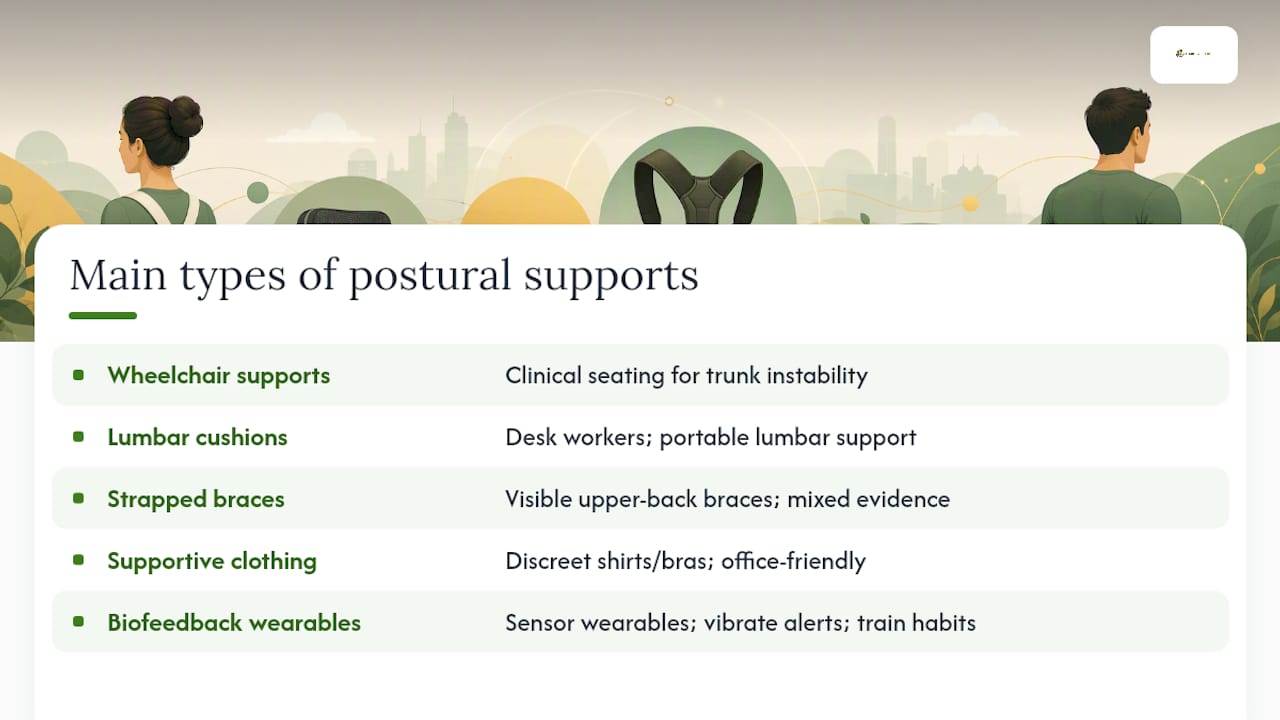
Wheelchair postural supports and cushions
These are the most clinically complex PSDs. Backrests, contoured seat cushions, footrests, armrests, and lateral trunk supports work together as a seating system for people with trunk instability. Physio-Pedia’s clinical overview explains that these additions reduce the risk of secondary deformity and improve function for wheelchair users — they are prescribed and fitted by a seating specialist, not purchased off a shelf.
Lumbar cushions and ergonomic seating accessories
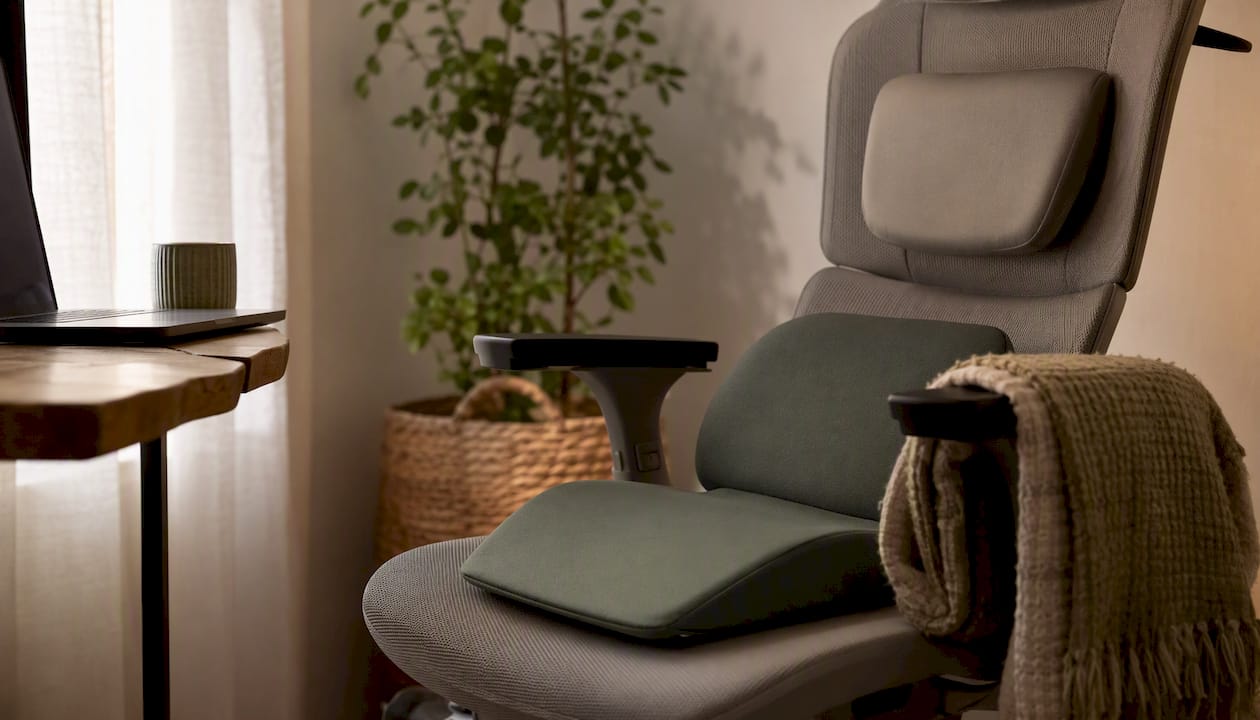
Wedge cushions, contoured lumbar rolls, and coccyx-relief cushions sit between you and your chair. They are the most accessible entry point for desk workers: no fitting required, immediate comfort improvement, and easy to move between home and office. The goal is passive lumbar support that reduces the muscular effort of holding a neutral spine for hours.
Strapped posture braces
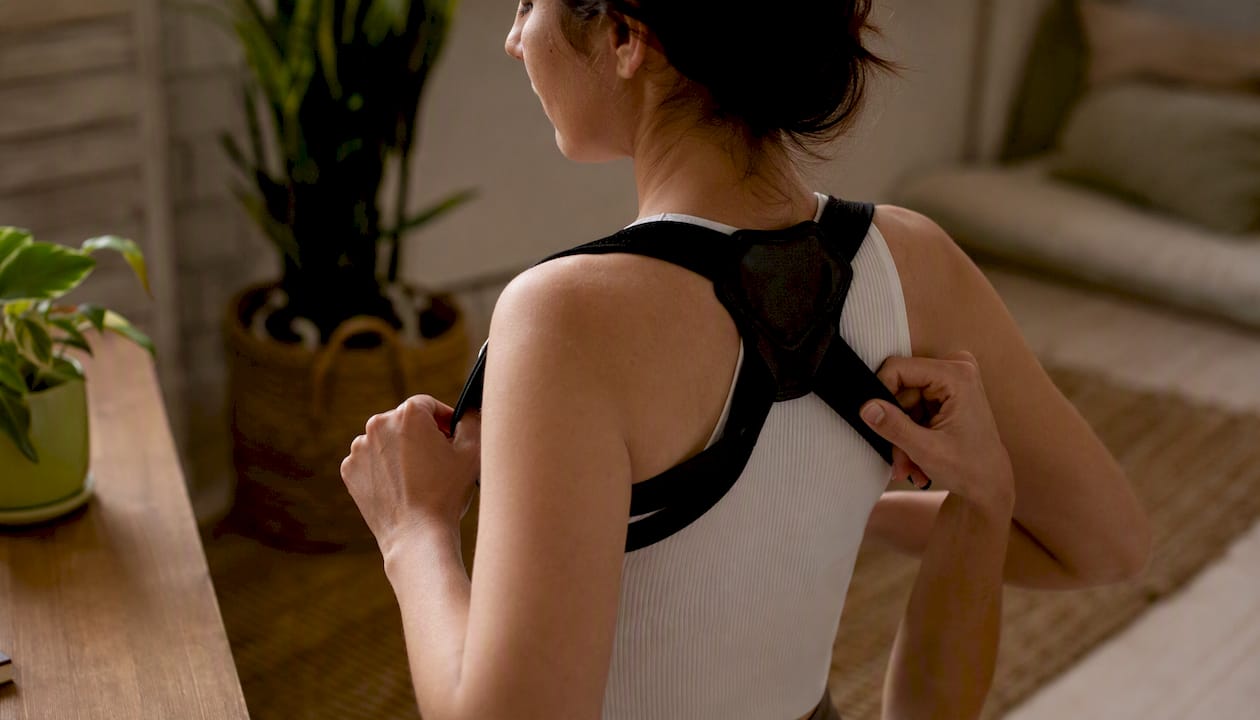
These wrap around the shoulders and upper back, using elastic tension to pull the scapulae into retraction. They are the most visible category and the one most people picture when they hear “posture corrector.” Healthline’s consumer overview notes that these range from lightweight figure-8 straps to more structured upper-back braces, and that current evidence for long-term benefit is mixed.
Supportive clothing
Posture shirts and posture bras use strategically placed elastic panels to cue thoracic extension without the bulk of a brace. They are discreet enough to wear under work clothes, which makes them practical for office environments. Comfort and breathability vary significantly by brand and fabric.
Biofeedback wearables
Sensor-based devices — worn on the upper back, chest, or as a clip on clothing — detect forward flexion and respond with a vibration or a smartphone notification. These are the most tech-forward category and the one with the most active research. They work by training proprioceptive awareness rather than mechanically holding you in place, which is a meaningful distinction for long-term habit building.
Who actually needs a postural support device?
Most people who search for PSDs fall into one of four groups, and the right device (or whether a device is appropriate at all) depends heavily on which group you are in.
Desk workers with postural strain are the largest consumer audience. Hours of forward-head posture, rounded shoulders, and anterior pelvic tilt create chronic muscle imbalance. For this group, a consumer PSD used as a cue — not a crutch — can accelerate habit change when paired with posture improvement exercises.
Wheelchair users and people with neurological conditions need clinically prescribed seating systems. Trunk instability from conditions like cerebral palsy, spinal cord injury, or multiple sclerosis creates real risk of secondary deformity without proper support. Consumer products are not appropriate substitutes here.
People recovering from injury or surgery may use prescribed bracing during a defined recovery window. The device is part of a clinical plan, not a standalone fix.
Older adults with balance and postural control changes sometimes benefit from trunk-support garments or lumbar bracing, but only after a physical therapist has ruled out underlying causes.
The clinical red flags that mean you should see a professional before buying anything are clear: Medical News Today’s clinical guidance states that chronic pain, numbness, tingling, or progressive deformity require a professional physical therapy assessment first. A wearable device is not the starting point for these symptoms.
Pro Tip: If your discomfort has been present for more than six weeks, worsens with activity, or radiates into your arms or legs, book an appointment with a physical therapist or physician before purchasing any PSD. A correct diagnosis makes the device choice obvious — and sometimes reveals that a device is not what you need at all.
How do postural devices work, and what benefits can you expect?
PSDs change your posture through three distinct mechanisms, and understanding which one a device uses tells you a lot about what to expect from it.
Mechanical support is the most straightforward: the device physically holds a body segment in a more aligned position. A lumbar cushion fills the lordotic curve; a wheelchair backrest prevents trunk collapse. The benefit is immediate and passive — your muscles do less work to maintain alignment. The risk, if overused, is that those same muscles get less training stimulus.
Proprioceptive feedback is how most consumer braces and biofeedback wearables work. Physical therapists describe posture correctors primarily as proprioceptive training tools — they remind your nervous system what aligned posture feels like, but they do not fix the underlying muscle imbalance on their own. The device is the cue; your muscles still have to do the work.
Sensory biofeedback (vibration, app alerts) takes proprioception a step further by adding an external signal when you drift out of alignment. This is where wearable technology is most active right now.
The practical benefits for desk workers include:
- Reduced perceived muscle effort during prolonged sitting, which AdventHealth’s clinical review notes makes PSDs useful adjuncts when combined with ergonomic changes
- Improved body awareness that carries over even when the device is off
- Pressure redistribution for seated users, reducing discomfort at the tailbone and lumbar spine
- A faster feedback loop for learning what neutral spine actually feels like
What the research shows: A systematic review published in MDPI Applied Sciences found immediate improvements in postural alignment and body awareness across several small trials of biofeedback wearables — particularly those using vibratory or visual feedback. The same review cautions that heterogeneous study designs and short follow-up periods limit any strong long-term claims.
What does the evidence say, and what are the safety risks?
The honest summary: PSDs show real short-term promise, especially for awareness and alignment during the wear period, but the long-term picture is still being worked out. The MDPI systematic review included randomized and quasi-experimental studies through 2025 and found that methodological limitations restrict definitive clinical recommendations. Small sample sizes, varying device types, and short follow-ups make it difficult to say with confidence that any one device produces lasting structural change.
That does not mean PSDs are not worth using. It means they work best as part of a broader plan.
The safety risks are real and worth knowing before you buy:
- Muscle dependency: wearing a brace all day reduces the demand on your postural muscles. Over time, this can weaken the muscles you are trying to train, which is the opposite of the goal.
- Skin irritation: straps and elastic panels worn for extended periods can cause chafing, especially in warm environments or during physical activity.
- Breathing restriction: a brace that is too tight around the thorax can limit respiratory excursion. This is more common with rigid or semi-rigid upper-back braces.
- Symptom masking: a device that reduces pain without addressing its cause can delay a diagnosis that actually needs treatment.
AdventHealth’s guidance is direct: experts advise against indefinite, full-day use. PSDs are supplemental tools, best paired with strengthening, movement breaks, and ergonomic optimization. Stop use and consult a clinician if you experience numbness, worsening pain, or any difficulty breathing while wearing a device.
How to choose and fit a postural support device
Getting the right device comes down to matching the tool to the problem. A shoulder brace does nothing for lumbar pain; a lumbar cushion will not address forward-head posture. Start with the goal, then evaluate the device.
- Define your primary goal. Are you looking for mechanical support (lumbar cushion, wheelchair backrest), a proprioceptive cue (shoulder brace, posture shirt), or real-time biofeedback (vibration wearable)? Each mechanism suits a different need.
- Check for adjustable fit. A device that cannot be sized to your body will either be too loose to work or too tight to wear safely. Look for adjustable straps, multiple size options, or custom-fit availability.
- Assess breathability. If you plan to wear it during a workday, fabric matters. Mesh panels and moisture-wicking materials make the difference between a device you actually use and one that sits in a drawer.
- Confirm the return policy. Consumer PSDs vary widely in how they feel on different body types. A 30-day return window lets you test the device in your actual work environment.
- Ask whether clinical fitting is recommended. Over-the-counter devices work for most desk workers. If you have a diagnosed spinal condition, trunk instability, or are recovering from surgery, a seating specialist or physical therapist should fit the device.
Questions worth asking a clinician or supplier before purchasing:
- Will this device change my function, or just my comfort?
- Is it appropriate for my specific diagnosis or postural pattern?
- How many hours per day should I wear it, and for how long?
For a simple self-check after you put a device on: stand or sit in your normal working position, check that your spine feels neutral (not forced), confirm your shoulders are relaxed rather than pulled back uncomfortably, and wear it for 20 minutes of typical activity. If anything feels pinched, restricted, or painful, the fit is wrong.
Cost range: Over-the-counter consumer PSDs typically range from low to moderate prices. Custom-prescribed devices, including wheelchair seating systems and clinical orthoses, vary widely based on complexity and insurance coverage.
Pro Tip: Before buying a consumer PSD, spend five minutes reviewing your cubicle or desk setup first. A monitor at the wrong height or a chair set too low creates postural strain that no brace can fully compensate for. Fix the environment, then add the device.
A practical starter plan for desk workers
If you sit for long hours and want to use a PSD sensibly, the progression below keeps you on the right side of the dependency risk while building real habit change.
- Start with 15–30 minutes per day as a pure cue. Put the device on during a focused work block, notice what aligned posture feels like, then take it off. The goal at this stage is awareness, not support.
- Pair it with two or three targeted exercises — scapular retractions, thoracic extension over a foam roller, or chin tucks. The device cues the position; the exercises build the strength to hold it without the device.
- Progress to 1–2 hours of targeted wear once you can maintain alignment comfortably during the cue period. Never wear a consumer brace for a full workday.
- Set a microbreak schedule. Every 30–45 minutes, stand, move, and do a few shoulder rolls or a brief walk. PSDs work best when they are part of a movement-rich day, not a substitute for one.
- Adjust your environment in parallel. Screen at eye level, chair height so your feet are flat and knees at roughly 90 degrees, and keyboard close enough that your elbows stay near your sides. These workplace wellness adjustments reduce the postural load that makes a PSD necessary in the first place.
Pro Tip: Combine your PSD sessions with two sets of scapular retractions (10 reps, 3-second hold) and one set of thoracic extension over a chair back. This pairing accelerates carryover — your body learns the position actively, not just passively from the device.
The honest case for using PSDs as tools, not fixes
PSDs get oversold in two directions at once. On one end, marketing copy implies they will reshape your spine in weeks. On the other, skeptics dismiss them as gimmicks with no real value. Both positions miss the point.
The research is clear that short-term alignment and awareness improvements are real, particularly with biofeedback wearables. What the evidence does not support is the idea that wearing a brace passively, without exercise or ergonomic change, produces lasting structural results. Physical therapists frame these devices correctly: they are proprioceptive training tools, not passive cures.
For desk workers specifically, the value proposition is practical. You spend eight or more hours a day in a position your body was not designed to hold indefinitely. A well-chosen PSD used for a focused cue period, paired with movement and a decent chair setup, genuinely accelerates the habit-building process. That is not a small thing. Posture is a habit, and habits need cues.
Where PSDs fall short is when people use them to avoid addressing the root cause. A shoulder brace worn all day while sitting in a chair set at the wrong height, with a monitor too low, and no movement breaks is not a posture plan. It is a workaround. The device should be the last layer added to a solid ergonomic foundation, not the first and only intervention.
For anyone with chronic pain, neurological symptoms, or a diagnosed spinal condition, the clinical guidance is consistent: get a professional assessment before buying anything. A physical therapist can identify whether the driver of your poor posture is muscle weakness, joint stiffness, motor control, or something that needs medical attention. That diagnosis makes every subsequent decision, including which device to use, far more effective.
Habitposture gear built for screen-based lifestyles
If you are a desk worker, gamer, or remote professional looking for a practical, comfortable posture cue, Habitposture offers ergonomic posture correctors, adjustable back braces, and high-back office and gaming chairs designed specifically for prolonged screen use. No bulky medical hardware. No complicated fitting appointments. Just gear that works while you work.
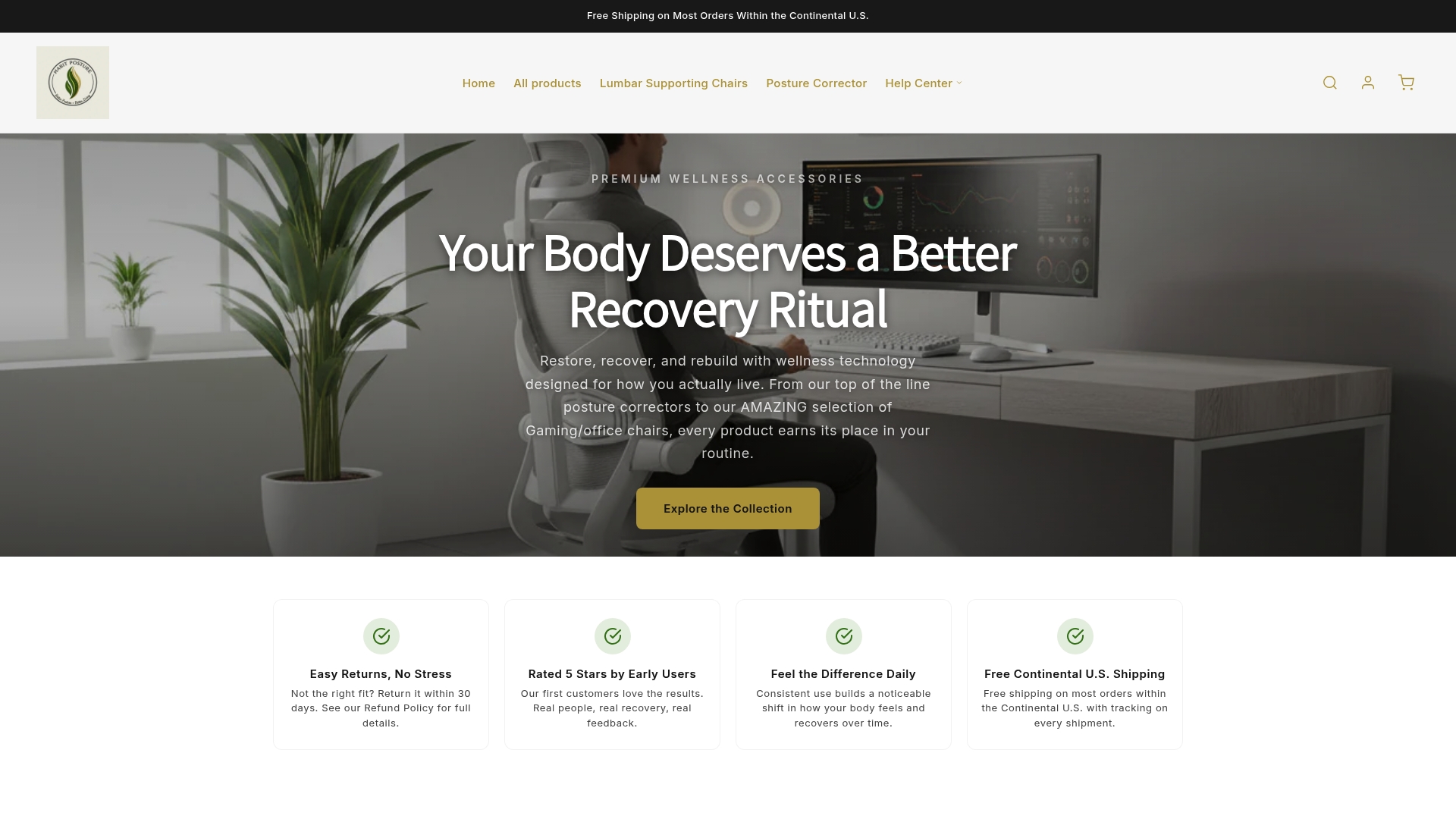
The full catalog includes posture correctors, lumbar support accessories, and massage guns for muscle tension relief — everything you need to build a solid ergonomic setup at home or in the office. For medical-grade needs, a diagnosed spinal condition, or neurological symptoms, consult a physical therapist or physician for a prescribed device.
Ready to build better posture habits? Browse the Habitposture collection and find the right fit for your setup.
Sources
The following sources informed this article and are worth reading if you want the clinical detail or evidence summaries behind any section.
- Do Posture Correctors Work? Expert Advice from a PT — HSS
- Posture-Correcting Devices – Hype or Benefit? | AdventHealth
- Wearable devices for posture correction: systematic review — MDPI Applied Sciences
- Posture correctors: Effectiveness, types, and when to see a doctor — Medical News Today
- Do posture correctors work? — Healthline
- Postural Support Devices — Physio-Pedia