What Is Postural Correction and How Does It Work
Postural correction is the practice of restoring proper alignment and function to the body’s musculoskeletal structure through targeted exercises, manual therapies, and environmental habit changes. It is not about rigidly holding one “perfect” position. Clinical physiotherapy defines it as individual habit remapping and muscle retraining, addressing the root causes of misalignment rather than the symptoms. If you spend most of your day at a screen and your neck starts aching by 2 PM, postural correction is the structured answer to why that happens and what actually fixes it.
What is postural correction and why does alignment matter?
Postural correction targets three of the most common structural problems in desk-bound people: forward head posture, rounded shoulders, and hyperkyphosis (an exaggerated upper back curve). Each of these conditions shifts the body’s center of gravity forward, forcing muscles to work harder just to keep you upright. Over time, that extra load creates chronic tension, joint strain, and fatigue.
The research behind corrective exercises is strong on the structural side. A meta-analysis of 28 RCTs with 901 patients shows consistent, large effect sizes in reducing forward head and rounded shoulder angles through corrective exercise programs. That means the exercises measurably change the angles of your spine and shoulders, not just how you feel in the moment.
Proper postural correction also strengthens back and core muscles so the body naturally holds a healthy position without constant conscious effort. That is the real goal: building a body that defaults to good alignment, not one that has to be reminded every five minutes.
Pro Tip: Think of postural correction as strength training for your default position. The goal is not to “hold” good posture. The goal is to build the muscle and habit so good posture happens automatically.
| Postural issue | Primary muscle imbalance | Correction focus |
|---|---|---|
| Forward head posture | Weak deep neck flexors | Chin tucks, neck strengthening |
| Rounded shoulders | Tight pectorals, weak rhomboids | Scapular retraction, chest stretching |
| Hyperkyphosis | Weak mid-back extensors | Thoracic extension, row variations |
| Anterior pelvic tilt | Tight hip flexors, weak glutes | Hip flexor stretching, glute activation |
Why postural correction does not always fix pain right away
Structural improvements in posture do not immediately relieve pain. The nervous system adapts more slowly than the musculoskeletal system, which means your spine can straighten before your brain stops interpreting that area as a threat. This gap frustrates a lot of people who do the exercises correctly and still feel discomfort weeks in.
Research confirms this disconnect. Corrective exercise programs produce strong improvements in forward head, shoulder, and hyperkyphosis angles, but show inconsistent results in pain and functional outcomes. High variability between individuals explains much of this. Two people with identical posture measurements can have completely different pain experiences.
Forcing a rigid “sit up straight” position can create new muscle imbalances and pain. Experts recommend strengthening and balanced muscle activation instead of overcorrecting into a fixed stance. The body needs load distribution, not a locked position.
Individual variability also means that what works quickly for one person may take months for another. Factors like sleep quality, stress levels, and movement history all affect how fast the nervous system adapts. Patience is not optional. It is part of the process.
Pro Tip: If you correct your posture and still feel pain, do not assume the correction is wrong. Give your nervous system time to catch up. Consistency over weeks matters more than perfection in any single session.
How to correct posture with evidence-backed techniques
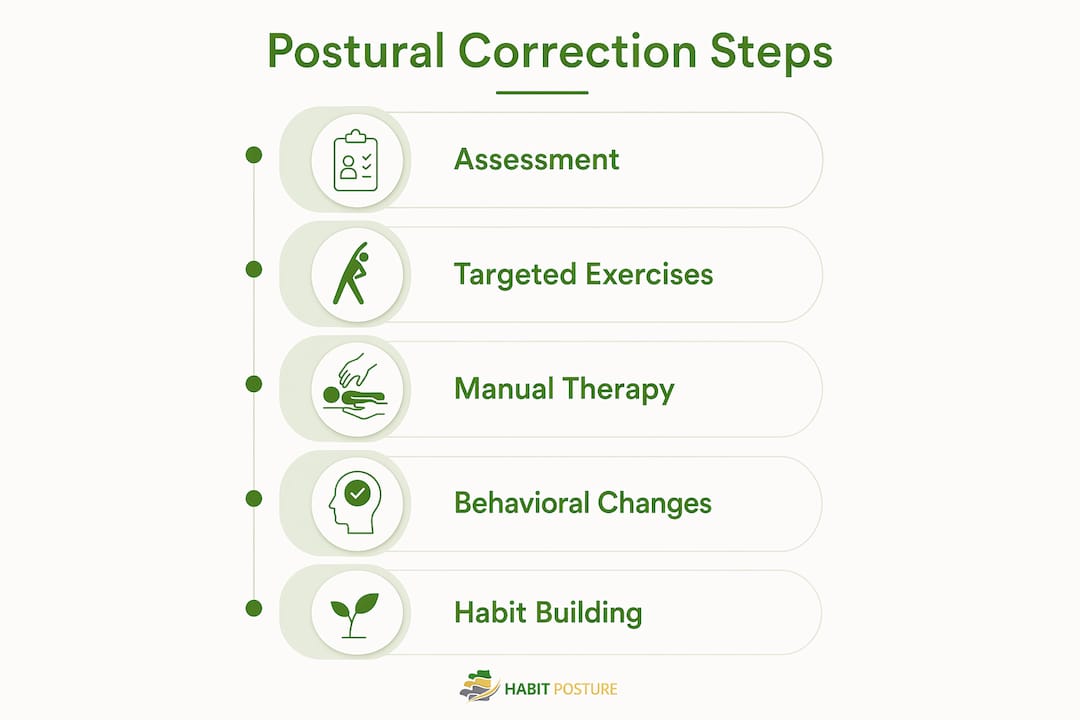
Effective posture correction combines three categories of work: targeted strengthening, manual therapy, and behavioral change. Skipping any one of them slows results.

Targeted strengthening exercises
The most effective exercises for desk workers focus on the posterior chain, specifically the muscles that pull the shoulders back and hold the spine upright.
- Chin tucks: Pull your chin straight back (not down) to activate deep neck flexors. Hold for 5 seconds. Repeat 10 times, twice daily.
- Scapular retractions: Squeeze your shoulder blades together and hold for 5 seconds. This directly counters rounded shoulders.
- Thoracic extensions: Use a foam roller or chair back to extend your upper spine backward. This reverses the forward curve from prolonged sitting.
- Rows (banded or cable): Strengthening rhomboids and trapezius counters forward shoulder strain. Two to three sets of 12 reps, three times per week, is a solid starting point.
- Dead bugs and planks: Core stability supports the entire spinal column and reduces lower back load during sitting.
Manual therapy and stretching
Manual therapy combined with corrective exercises produces up to 60% greater chronic pain reduction than manual therapy alone. That is a significant margin. Soft tissue work releases tight pectorals and hip flexors that pull the spine out of alignment, making the strengthening exercises more effective.
Stretching the chest, hip flexors, and thoracic spine creates the mobility needed for corrective exercises to actually work. Without that mobility, you are strengthening muscles that are already fighting restricted range of motion.
Behavioral and ergonomic changes
- Set your monitor at eye level so your head does not drift forward.
- Position your keyboard so your elbows stay at roughly 90 degrees.
- Use a chair with ergonomic lumbar support to maintain the natural curve of your lower back.
- Take a movement break every 40–50 minutes. Medical guidance recommends at least 5 minutes of moderate activity per break to counteract the effects of prolonged sitting.
- Keep your phone at eye level to avoid “tech neck” from looking down repeatedly.
Do posture correctors actually help?
Posture correctors are proprioceptive aids, not fixes. They work by giving your muscles a sensory cue to engage, not by holding your body in place for you. That distinction matters because wearing braces too long can cause muscle dependency, where the muscles stop activating on their own because the device is doing the work.
The correct approach is short-duration use combined with active exercise. Think of a posture corrector as a reminder, not a solution. Wear it for 20–30 minutes while doing focused work, then take it off and let your muscles hold the position independently.
- Use a posture corrector as a training cue, not a crutch.
- Limit wear to short sessions, especially when starting out.
- Pair every wearing session with at least one active exercise.
- Gradually reduce reliance on the device as your muscle strength improves.
- Choose a lightweight, wearable design that fits your daily routine without restricting movement.
Habitposture builds its wearables around this exact principle. The gear is designed to cue your body, not replace it, so your muscles do the actual work of building lasting alignment.
How to build sustainable postural habits for the long term
The best posture is your next posture. Modern physiotherapy emphasizes movement variability over holding any single position, even a “correct” one. Staying locked in one stance for hours, even a good one, still creates muscle fatigue and joint compression.
Sustainable postural correction is about retraining micro-habits throughout the day. Small, frequent adjustments beat one long “posture session” every time. The goal is to make good alignment your default, not your project.
- Set a timer or use a wearable reminder to shift position every 30–40 minutes.
- Alternate between sitting and standing if your workstation allows it.
- Check your posture during long desk sessions by doing a quick body scan: feet flat, knees at 90 degrees, lower back supported, shoulders relaxed, head level.
- Adjust your phone and tablet height to avoid repeated neck flexion throughout the day.
- Build a 5-minute morning routine with two or three of the strengthening exercises above.
Pro Tip: Attach your posture check to something you already do, like every time you take a sip of water or open a new browser tab. Habit stacking is faster than willpower.
Key Takeaways
Postural correction works by combining targeted strengthening, manual therapy, and daily habit changes to restore natural musculoskeletal alignment over time.
| Point | Details |
|---|---|
| Definition of postural correction | It is muscle retraining and habit remapping, not just “sitting up straight.” |
| Structural vs. pain outcomes | Exercises reliably improve alignment angles but pain relief varies by individual. |
| Most effective technique combo | Manual therapy plus corrective exercises reduces chronic pain significantly more than either alone. |
| Posture correctors as tools | Use them short-term as proprioceptive cues, always paired with active strengthening. |
| Sustainable habits beat perfection | Movement variability and frequent micro-adjustments matter more than holding one fixed position. |
The myth of “perfect posture” and what actually works
I have seen the same pattern repeat itself with almost everyone who comes to posture correction late. They have spent years being told to “sit up straight,” they try it, it hurts, and they give up. The advice is not just unhelpful. It is actively counterproductive.
The real problem is that most people treat posture as a static target. They imagine one ideal position and try to hold it. But the body is not built for static loads. It is built for movement. The research backs this up: static “perfect posture” is a myth, and movement variability is what actually protects joints and muscles over time.
What I have found works is treating posture correction like physical training, not a behavior correction. You would not expect one gym session to build strength. The same logic applies here. The people who see lasting results are the ones who build a short daily routine, adjust their environment, and use tools like wearables as cues rather than solutions.
The other thing worth saying plainly: most people are not “lazy” about their posture. They are just in pain, sitting in poorly set up workspaces, with no one telling them what to actually do. Postural correction is not about discipline. It is about having the right information and the right support structure around you.
— Thomas
Habitposture: built for people who sit too long
If you spend most of your day at a screen, your posture is already working against you. Habitposture is designed for exactly that situation.
The gear cues your muscles without locking you in place, so you build real strength and real habits. Pair it with an ergonomic workstation setup and the movement breaks outlined in this article, and you have a complete correction system that fits into your actual day. No clinic required. No guilt. Just consistent progress. Visit Habitposture to find the right support for your setup and start building better alignment today.
FAQ
What is postural correction in simple terms?
Postural correction is the process of retraining your muscles and daily habits to restore natural spinal alignment. It combines targeted exercises, manual therapy, and ergonomic adjustments rather than simply “sitting up straight.”
How long does postural correction take to work?
Structural alignment improvements can appear within weeks of consistent corrective exercise. Pain relief takes longer because the nervous system adapts more slowly than the musculoskeletal system.
What causes poor posture in desk workers?
Prolonged sitting shortens hip flexors and weakens posterior chain muscles, pulling the spine into forward head posture and rounded shoulders. Poorly set up workstations accelerate this process significantly.
Are posture correctors worth using?
Posture correctors are effective as short-term proprioceptive cues when paired with active strengthening exercises. Used alone for extended periods, they can cause muscle dependency and reduce the muscles’ ability to hold alignment independently.
What postural alignment exercises work best for office workers?
Chin tucks, scapular retractions, thoracic extensions, and banded rows are the most targeted exercises for desk-bound posture issues. Performing them three times per week alongside regular movement breaks produces the strongest results.