Posture Benefits of Wearable Support Gear Explained
Wearable posture support gear is defined as any device worn on the body that delivers real-time feedback to promote spinal alignment and muscle engagement during screen time. These devices, which include smart posture clips like the Upright GO 2 and adjustable shoulder braces, provide measurable posture benefits by interrupting slouching before it becomes a habit. A controlled study of 165 office workers spending more than 6 hours daily at a screen found significant posture angle improvements over 4 weeks. The posture benefits of wearable support gear come not from physically forcing your spine into place, but from training your body to recognize and hold better alignment on its own.
1. How do wearable posture correctors improve posture during screen use?
Wearable posture correction devices work through a mechanism called biofeedback. The device detects when your spine deviates from a set alignment and sends a vibration or audio cue to prompt you to correct it. That interruption is the entire point. It stops the slouch before your muscles lock into it.
Smart biofeedback sensors reduce neck flexion, thoracic kyphosis, and pelvic tilt during focused 1-hour computer tasks in healthy adults. Each of those three issues is a direct result of staring at a screen for too long. Correcting all three simultaneously is something a passive brace simply cannot do.
The key difference between a passive brace and a smart wearable is muscle engagement. A rigid brace holds your body in position for you, which means your muscles do less work. A biofeedback device prompts you to self-correct, which means your postural muscles stay active. Wearable posture supports are most effective as behavior coaches rather than structural supports.
- Vibration alerts interrupt slouching in real time without disrupting your workflow
- Posture angle tracking gives you data on how long you hold good alignment
- App integration (available on devices like Upright GO 2) shows daily progress and trends
- Muscle activation is encouraged rather than replaced, building long-term strength
Pro Tip: Set your biofeedback device to its most sensitive setting for the first two weeks. Your body will learn faster when corrections come early, before the slouch gets deep.
2. Top 5 types of wearable posture support gear and their features
Not all posture improvement devices work the same way. Choosing the right type depends on your screen time habits, comfort preferences, and how much feedback you want during the day.
1. Smart posture clips Devices like the Upright GO 2 attach to your upper back and vibrate when you slouch. They connect to a smartphone app, track your posture score over time, and let you set training sessions. These are the most data-rich option for screen workers who want measurable progress.
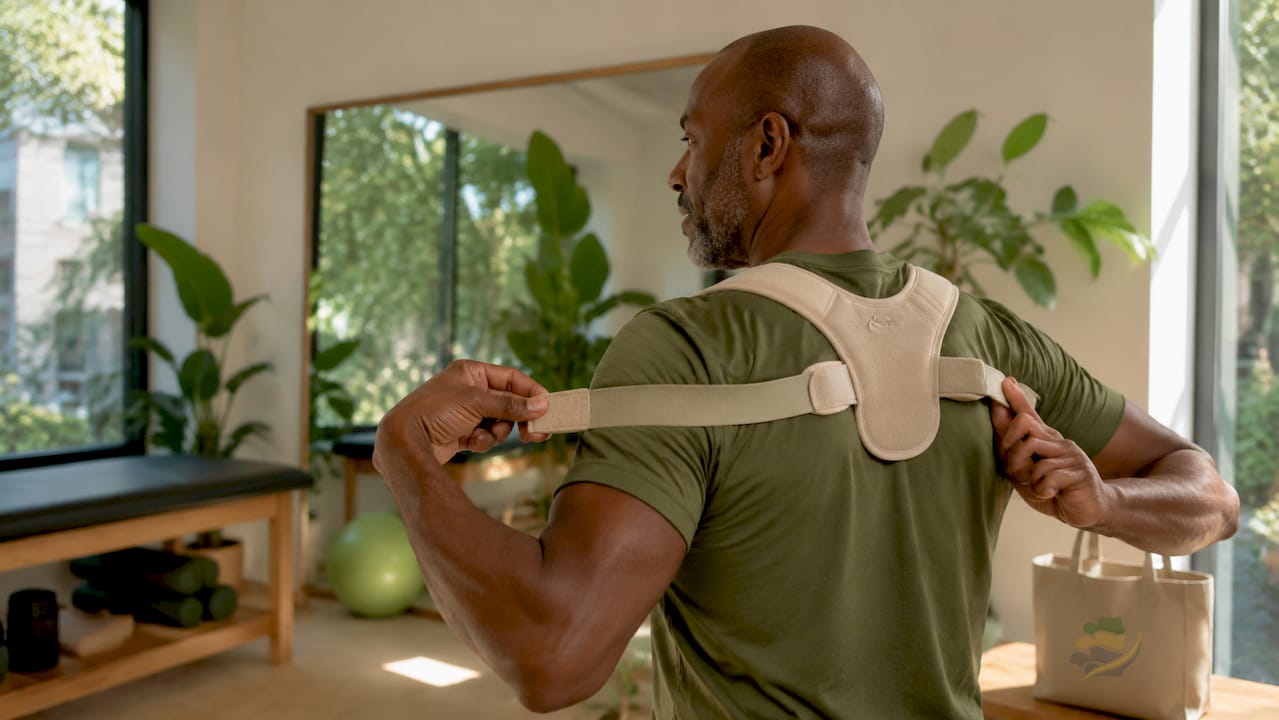
2. Adjustable shoulder braces These wrap around your shoulders and upper back to pull them into alignment. They are passive by design, meaning they provide physical resistance rather than feedback. An adjustable shoulder brace works well for short-duration use during high-focus tasks, but daily all-day wear carries a dependency risk.
3. Posture-correcting apparel Compression shirts and posture-specific garments weave elastic panels into the fabric to cue alignment. They are the least intrusive option and work well for people who dislike wearing external devices. The feedback is subtle, making them better for mild posture issues than severe slouching.
4. Smart wearables with EMG and AI Advanced devices now combine accelerometers, electromyography sensors, and AI to detect both poor posture and muscle fatigue simultaneously. AI-integrated wearables analyze EMG and posture data together to deliver vibration feedback at the exact moment your muscles start to tire. This is the most targeted option available for prolonged screen use.
5. Magnetic support belts Magnetic posture correctors use embedded magnets alongside adjustable straps to support the lower back and shoulders. A magnetic posture corrector reduces muscle fatigue and encourages correct alignment without electronics. These suit people who want a low-tech, comfortable option for long work sessions.
Pro Tip: Rotate between a smart biofeedback device and a lighter posture-correcting garment throughout the week. You get the training benefit of active feedback without overloading any single muscle group.
3. Comparing wearable posture gear: effectiveness, comfort, and usability
Choosing between posture enhancement technology options requires looking at more than price. The table below compares the five main types across the factors that matter most for screen workers.
| Type | Feedback method | Muscle engagement | Comfort for long wear | Dependency risk | Price range |
|---|---|---|---|---|---|
| Smart posture clip (e.g., Upright GO 2) | Vibration + app | High | Moderate | Low | $$$ |
| Adjustable shoulder brace | Physical resistance | Low | Moderate | High | $ |
| Posture-correcting apparel | Tactile pressure | Moderate | High | Low | $$ |
| AI + EMG smart wearable | Vibration + data | High | Moderate | Low | $$$$ |
| Magnetic support belt | Physical + magnetic | Low to moderate | High | Moderate | $$ |
The systematic review covering 103 participants confirmed that wearable spinal monitoring systems are supplemental tools, not clinical cures. That finding matters because it sets the right expectation. No device on this list will fix a structural spinal issue. What they will do is build better daily habits during the hours you spend at a screen.
Comfort directly affects how long you wear a device. A device you take off after two hours delivers far fewer benefits than one you wear for six. For most screen workers, posture-correcting apparel and magnetic belts win on comfort, while smart clips win on data and behavior change.
4. Evidence-based benefits of posture support for screen workers
The posture benefits of wearable support gear are well-documented for office environments. Consistent adherence to wearing a smart posture device correlates directly with posture improvements over time. That correlation means the device only works if you actually wear it, which sounds obvious but is the most common failure point.
Musculoskeletal problems from bad posture and muscle fatigue are addressable through smart wearables integrating posture correction and muscle fatigue detection. Catching fatigue early prevents the compensatory slouching that causes neck and shoulder pain by mid-afternoon. That is the real value for anyone grinding through an 8-hour screen day.
Posture correctors increase awareness and muscle engagement but are not a shortcut. Physical therapists are clear on this point. The device is a training tool. The goal is to need it less over time as your body builds the habit of holding good alignment independently.
5. Best practices for maximizing posture benefits with wearable support gear
Getting the most from any posture improvement device requires a structured approach. Wearing the device alone is not enough.
- Use intermittently, not all day. Wearing a passive brace for 8 hours straight can cause muscle dependency. Over-reliance on rigid braces causes muscle atrophy and worsens posture once the device is removed. Limit passive brace use to 1–2 hours at a time.
- Take movement breaks every 30–60 minutes. Stand, walk, and roll your shoulders. Physical therapists emphasize combining wearables with movement breaks and strengthening exercises for lasting results.
- Add targeted strengthening exercises. Focus on the deep neck flexors, rhomboids, and lower trapezius. These are the muscles that hold your posture when the device is off.
- Track your posture score. If your device has an app, review your weekly data. Declining scores on certain days often reveal patterns, like worse posture during afternoon video calls.
- Reduce device sensitivity gradually. As your posture improves, lower the sensitivity setting so your body does more of the work. This is how you transition from device-dependent to self-correcting.
- Pair with an ergonomic chair. A wearable device works best when your environment supports good posture too. An ergonomic office chair with lumbar support reduces the postural load your wearable has to correct.
Pro Tip: Wear your biofeedback device during the specific activity where you slouch most, whether that is gaming, Zoom calls, or spreadsheet work. Targeted training beats all-day passive wear.
Key takeaways
Wearable posture support gear delivers real posture benefits by training muscle awareness and alignment habits, not by physically restructuring your spine.
| Point | Details |
|---|---|
| Biofeedback drives results | Vibration-based devices outperform passive braces for muscle engagement and long-term habit building. |
| Consistent wear matters | Adherence to daily device use correlates directly with measurable posture angle improvements. |
| Avoid all-day passive bracing | Rigid braces worn too long cause muscle dependency and weaken the muscles they are meant to support. |
| Combine with movement | Pairing wearables with movement breaks and strengthening exercises produces the best long-term outcomes. |
| Set realistic expectations | Wearables are behavior coaches, not structural fixes. Improvement is gradual and requires ongoing effort. |
What I actually think about posture wearables after years of watching people use them
Most people buy a posture wearable expecting it to fix them. They wear it for a week, feel better, and then either stop wearing it or wear it constantly and wonder why their posture collapses the moment they take it off. Both outcomes come from the same misunderstanding.
The device is not the solution. The device is the reminder. Your muscles are the solution. That distinction sounds small, but it changes everything about how you use the gear.
What I have observed consistently is that people who treat their wearable like a training tool, wearing it for focused sessions and then testing themselves without it, make real, lasting progress. People who treat it like a back brace they need to function stay dependent on it indefinitely.
The other thing worth saying plainly: posture is not a problem you solve once. Your screen time habits, your stress levels, your sleep, and your movement patterns all affect your posture daily. A wearable device is one input in that system. It is a good input. But it works best when you are also moving, strengthening, and paying attention to how your body feels throughout the day.
If you are 6 hours into a screen session and your neck is already aching, the wearable is not going to undo that. Start earlier. Wear it during the first two hours of your workday when your muscles are fresh and most trainable. That is when the feedback actually builds the habit.
Realistic expectations are not pessimism. They are what keep you using the gear long enough for it to actually work.
— Thomas
Habitposture gear built for real screen-time life
If you spend most of your day at a screen and want posture support that fits into your actual routine, Habitposture builds gear for exactly that situation.
The adjustable posture corrector paired with a professional massage gun gives you both the alignment support and the recovery tool in one package. For a dedicated brace option, the posture support collection covers adjustable shoulder braces and magnetic support belts designed for comfort during long wear. Habitposture also carries ergonomic seating to complement your wearable setup. No lectures, no guilt. Just practical gear that works while you do.
FAQ
What are the main posture benefits of wearable support gear?
Wearable posture support gear improves posture by delivering real-time biofeedback that prompts muscle activation and interrupts slouching. Studies show measurable improvements in posture angles and reductions in neck flexion, thoracic kyphosis, and pelvic tilt during screen use.
Can wearable gear improve posture permanently?
Wearable gear builds posture habits and muscle awareness over time, but improvement requires consistent use combined with movement breaks and strengthening exercises. Posture correctors are behavior coaches, not permanent structural fixes.
How long should you wear a posture corrector each day?
Physical therapists recommend intermittent use of 1–2 hours at a time for passive braces to avoid muscle dependency. Smart biofeedback devices can be worn for longer training sessions because they actively engage your muscles rather than supporting them passively.
What is the difference between a smart posture device and a passive brace?
A smart posture device like the Upright GO 2 uses sensors to detect slouching and vibrates to prompt self-correction, keeping your muscles active. A passive brace physically holds your body in position, which reduces muscle engagement and carries a higher dependency risk with prolonged use.
Do posture wearables work for neck and back pain from screen time?
Smart wearables that integrate posture correction and muscle fatigue detection address the musculoskeletal problems caused by prolonged screen use. They reduce the compensatory slouching that drives neck and shoulder pain, but they work best as part of a broader routine that includes movement and ergonomic seating.