Chest Opener Stretches for Desk Professionals: 2026 Guide
The most effective chest opener stretches for desk professionals are the seated interlace, the doorway forearm opener, and the standing cactus — all doable in 1–3 minutes, right at your desk, no equipment needed. If you have a foam roller nearby, a passive chest drape adds a fourth option that works while you decompress between calls.
Start right now:
- Seated interlace: Clasp your hands behind your back, straighten your arms, squeeze your shoulder blades together, and lift your chest. Hold 15–30 seconds. Breathe in through your nose, out through your mouth.
- Doorway opener: Stand in a doorframe, forearms at 90°, step one foot forward, and lean gently until you feel a stretch across your chest. Hold 15–30 seconds per side.
- Standing cactus: Stand tall, raise your arms to a “cactus” shape (elbows at shoulder height, bent 90°), then draw your elbows back. Hold 15–30 seconds.
Pro Tip: Exhale fully as you open your chest. That single breath cue deepens the stretch by 20–30% and signals your nervous system to release tension rather than guard against it.
Table of Contents
- Why tight chest muscles are wrecking your posture at a desk
- Step-by-step chest opener stretches for desk professionals
- How to do these safely: common mistakes, easy fixes, and when to stop
- When and how often to stretch: hold times, reps, and microbreak scheduling
- Making these stretches a daily habit
- What the research and occupational guidance actually say
- Key Takeaways
- The part most desk workers skip
- Habitposture supports the posture habits you’re building
- Further reading and useful sources
Why tight chest muscles are wrecking your posture at a desk
Every hour you spend hunched over a keyboard shortens your pectoralis major, pectoralis minor, and anterior deltoids. These three muscles form what movement specialists call the anterior chain, and when they tighten, they pull your shoulders forward and your head out in front of your spine.
The result is the classic “computer hunch”: rounded shoulders, a compressed thoracic spine, and a neck that juts forward. Chest opener stretches directly lengthen those anterior muscles, which takes pressure off the scapular stabilizers and allows your upper back to return to a more neutral position.
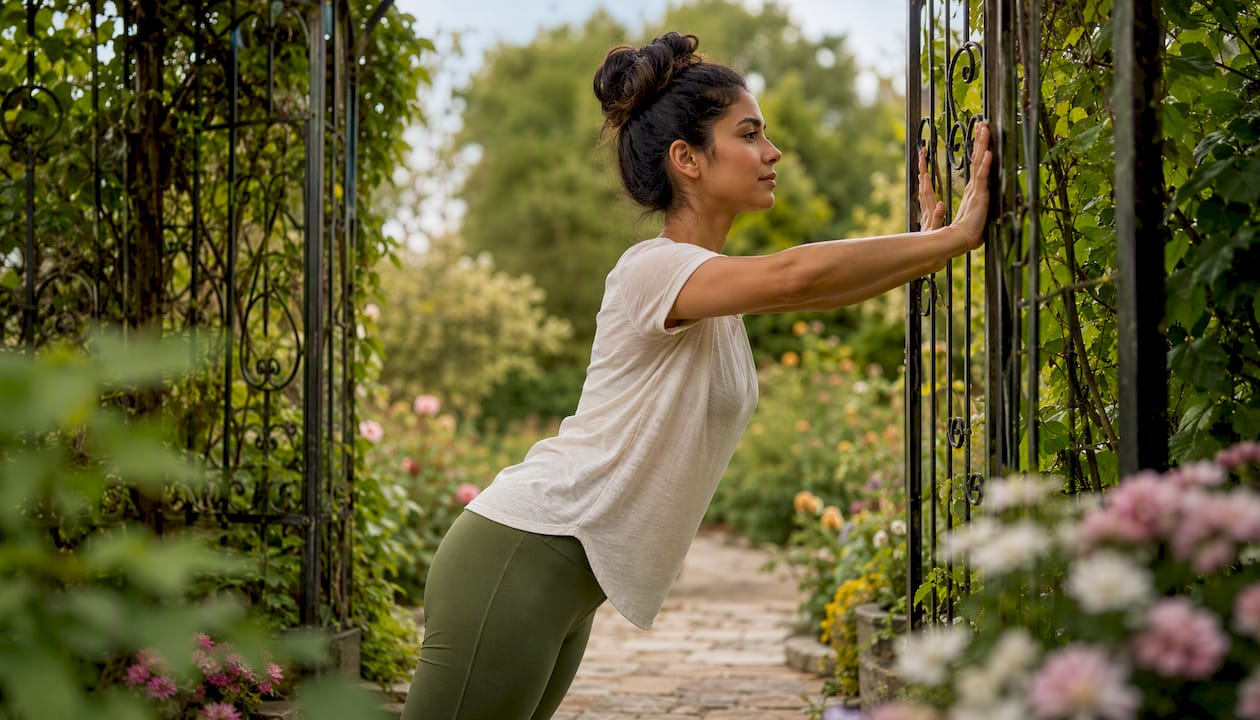
Beyond posture, opening the chest improves rib-cage mobility and breathing mechanics. Deeper breaths mean better oxygen exchange, which can sharpen your focus during long afternoon work sessions. The benefits are immediate: reduced upper-body tension, easier thoracic extension, and a genuine posture reset you can feel within minutes.
Key muscles targeted:
- Pectoralis major (the broad chest muscle)
- Pectoralis minor (the deeper, shoulder-blade-tipping muscle)
- Anterior deltoids (front of the shoulder)
- Intercostals (between the ribs, improved with deeper breathing)
Step-by-step chest opener stretches for desk professionals
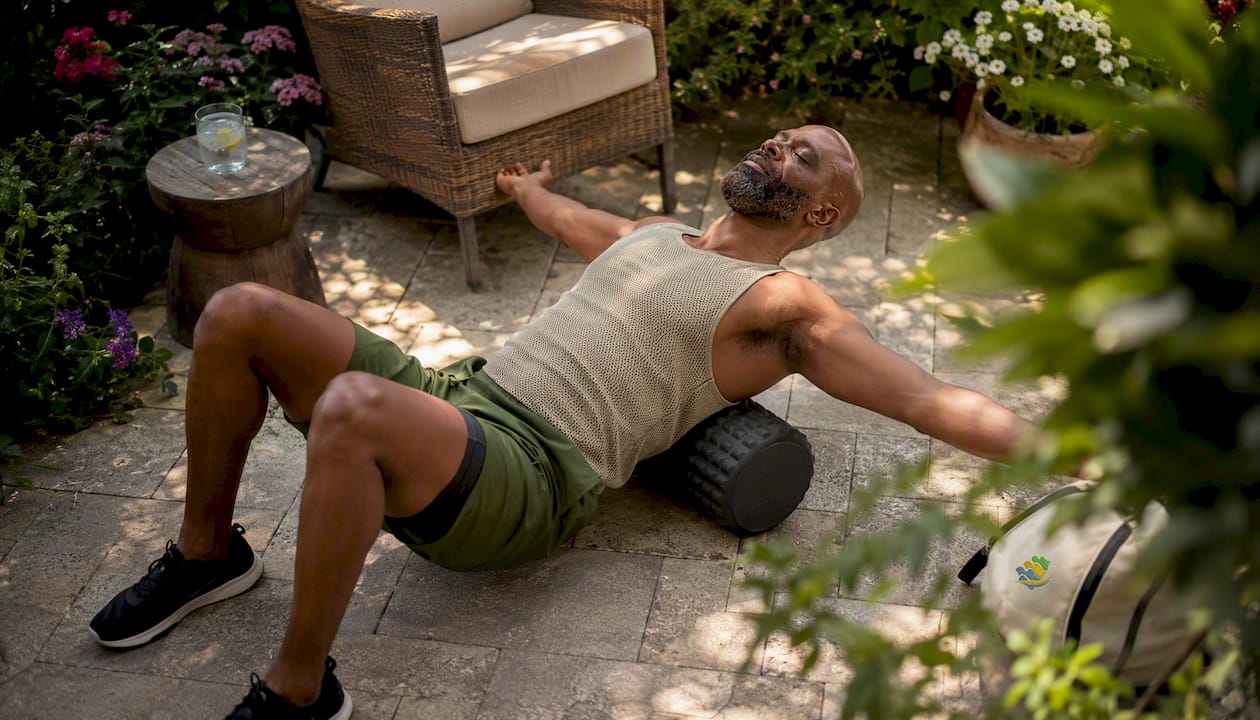
These four moves cover seated, standing, and passive options. Each one fits inside a 2–3 minute microbreak. According to Mayo Clinic’s workplace stretch guidance, gentle holds of 15–30 seconds without bouncing are the standard for safe upper-body stretching at work.
1. Seated interlace chest opener
- Sit tall at the edge of your chair, feet flat on the floor.
- Clasp your hands behind your lower back, palms facing each other.
- Straighten your arms and gently squeeze your shoulder blades together.
- Lift your chest toward the ceiling without arching your lower back.
- Hold 15–30 seconds, breathing slowly, and repeat.
Modification: If clasping your hands is uncomfortable, hold a folded towel or jacket between your hands instead. Keep your chin level — don’t let your head drop back.
Pro Tip: Press your feet firmly into the floor as you hold. That grounding cue keeps your pelvis stable and prevents the lower-back arch that reduces the stretch’s effectiveness.
2. Doorway forearm chest opener
- Stand in a doorframe and place both forearms on the frame at 90° (elbows at shoulder height).
- Step one foot forward into a slight lunge.
- Lean your torso gently forward until you feel a stretch across your chest and the fronts of your shoulders.
- Keep your core lightly engaged and your lower back neutral — avoid over-arching.
- Hold 15–30 seconds per side. Repeat 2–3 times.
This is the most effective standing chest opener for desk workers because it allows you to control depth precisely. If you feel any pinching in the shoulder joint, lower your elbows slightly below shoulder height.
3. Standing cactus (90° arm retraction)
- Stand tall with feet hip-width apart.
- Raise both arms to a “cactus” position: elbows at shoulder height, bent to 90°, palms facing forward.
- Squeeze your shoulder blades together and draw your elbows back as far as comfortable.
- Hold 15–30 seconds, then release and repeat.
This variation works well when a doorframe isn’t available, making it ideal for open-plan offices or home setups without a standard doorway. It also activates the mid-trapezius and rhomboids as you retract, adding a light strengthening component to the stretch.
4. Passive foam-roller chest opener (optional)
- Place a foam roller horizontally on the floor.
- Sit in front of it, then carefully lower your upper back onto the roller so it sits between your shoulder blades.
- Let your arms fall open to the sides, palms up.
- Breathe slowly and allow gravity to open your chest passively. Hold the stretch for about a minute or two.
This option suits remote workers or anyone with a private office. Short desk stretch routines that include passive openers like this one can relieve tension in under five minutes, making them a practical fit for lunch breaks or end-of-day recovery.
How to do these safely: common mistakes, easy fixes, and when to stop
The most common error desk workers make is treating a chest stretch like a competition. Pushing past a comfortable range doesn’t speed up results — it triggers a protective muscle contraction that actually tightens the area you’re trying to open.
Stretching should feel expansive, not painful. The goal is to signal safety to your nervous system, not to force structural change through discomfort.
Common mistakes and their fixes:
- Overstretching: You feel a sharp pull or joint pinch. Fix: back off 20% and hold at a comfortable tension.
- Arching the lower back: The lumbar spine compensates when the chest is too tight. Fix: engage your core lightly and tuck your pelvis slightly before opening.
- Bouncing or pulsing: This triggers the stretch reflex and can irritate tendons. Fix: hold steady and breathe.
- Rotating the torso: Twisting during a chest stretch shifts load to the spine. Fix: keep hips and shoulders square.
- Rushing repetitions: Moving in and out quickly reduces time under tension. Fix: use a slow 4-count inhale and 4-count exhale per hold.
Pro Tip: For anyone with a prior shoulder injury or rotator cuff issue, start with the seated interlace only — it places the least load on the shoulder joint — and avoid the doorway opener until cleared by a professional.
When and how often to stretch: hold times, reps, and microbreak scheduling
The American Heart Association’s flexibility guidance recommends holding each stretch for 10–30 seconds per repetition with deep, controlled breathing and no bouncing. For desk workers, a few repetitions per stretch per session is a practical target.
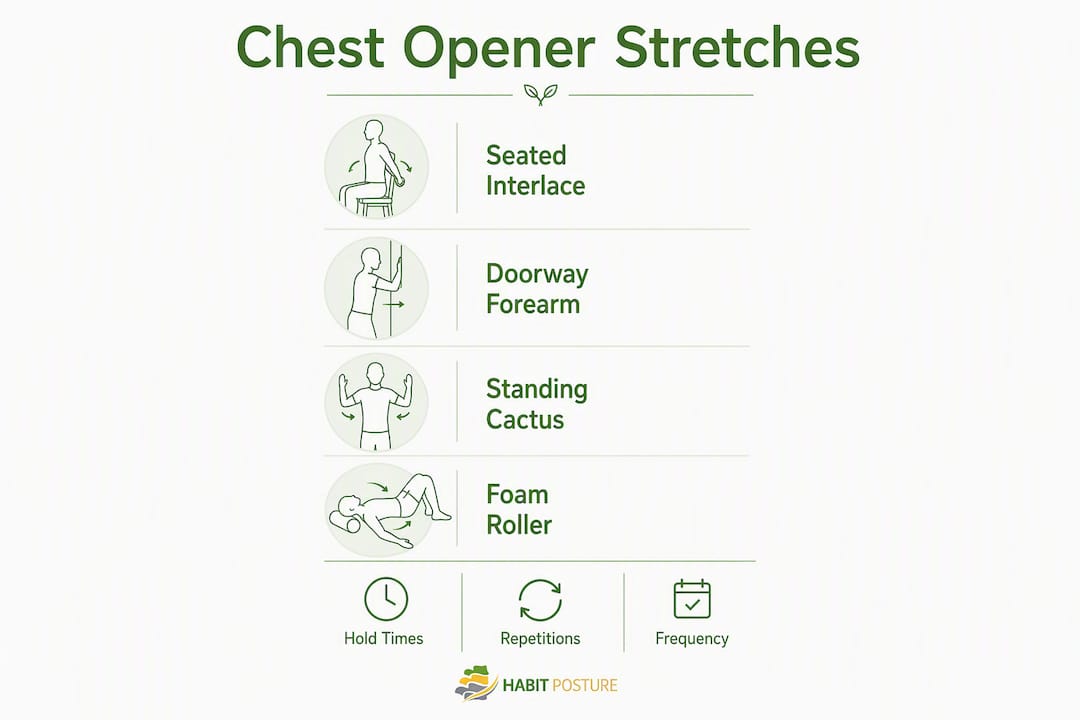
Professional occupational guidance recommends 1–5 minute movement breaks every 30–60 minutes to reduce physical strain from prolonged sitting. A realistic desk-worker version: a short stretch microbreak every half hour to 45 minutes.
| Stretch | Hold time | Reps | Suggested frequency |
|---|---|---|---|
| Seated interlace | 15–30 sec | 2–3 | Every 30–60 min |
| Doorway forearm opener | 15–30 sec per side | 2–3 | Every 30–60 min |
| Standing cactus | 15–30 sec | 2–4 | Every 30–60 min |
| Foam-roller passive opener | 10–30 sec | 1 | Once daily (lunch or end of day) |
Sample schedule you can drop into your calendar: 9:30 AM seated interlace + cactus / 11:00 AM doorway opener / 1:30 PM seated interlace / 3:00 PM cactus + doorway opener / 5:00 PM foam roller.
Stanford EHS microbreak guidance confirms that frequent, short breaks throughout the day outperform a single longer stretching session for maintaining relaxed anterior chest muscles.
Making these stretches a daily habit
The stretches take under three minutes. The hard part is remembering to do them. Here’s what actually works for desk workers:
Habit triggers that fit real work rhythms:
- End of every video call (stand up before you close the window)
- Calendar block labeled “posture reset” every 60 minutes
- Phone alarm at 10:30 AM and 2:30 PM
- After sending a long email or finishing a document
Two minimal routines:
- 3-minute posture reset (every 60 minutes): Seated interlace x2, standing cactus x3. Done.
- 2-minute mid-morning + mid-afternoon cluster: Doorway opener x2 per side, seated interlace x2.
Pro Tip: Keep a sticky note on your monitor that says “shoulders back?” — it sounds simple, but a visual cue in your direct line of sight is one of the most effective low-friction triggers for microbreak compliance.
Environmental cues matter too. A foam roller visible beside your desk is a passive reminder. A posture-aware work environment pairs these physical cues with ergonomic adjustments that reinforce the habit between stretches.
If you work in an office, consider making microbreaks a team ritual. A shared stretch break at the start of a meeting or a team movement challenge can turn an individual habit into a group norm, which dramatically improves consistency.
What the research and occupational guidance actually say
The evidence for microbreaks and chest stretching is consistent across occupational health, physical therapy, and sports science. A few key points worth knowing:
- Stanford EHS ergonomics guidance supports multiple short movement breaks rather than one long session for sustained musculoskeletal health.
- Mayo Clinic’s desk stretch resources emphasize that prolonged sitting stresses the neck, shoulders, and upper back — and that frequent physical activity breaks help.
- Stretching alone rarely resolves chronic desk posture. A combined approach that includes ergonomic adjustments and upper-back strengthening produces better long-term outcomes than flexibility work in isolation.
Pro Tip: Pair your chest stretches with two sets of scapular retractions (squeeze your shoulder blades together and hold for 5 seconds) to build the mid-back strength that keeps your posture open between stretches. This combination addresses both sides of the rounded-shoulder equation.
For a fuller picture of how stretching fits into a posture improvement plan without gym equipment, Habitposture’s resources cover the ergonomic and strengthening side of the equation.
Key Takeaways
Consistent, short chest opener stretches done multiple times throughout the workday are more effective than occasional long sessions for reversing desk-related tightness and improving posture.
| Point | Details |
|---|---|
| Top three stretches | Seated interlace, doorway forearm opener, and standing cactus cover seated and standing needs. |
| Hold time and reps | Hold each stretch 10–30 seconds, 2–4 reps per session, with slow controlled breathing. |
| Microbreak frequency | Aim for 1–3 minute movement breaks every 30–60 minutes throughout the workday. |
| Stretching alone isn’t enough | Combine chest openers with ergonomic adjustments and upper-back strengthening for lasting change. |
| Habitposture support | Habitposture’s ergonomic gear and posture correctors reinforce the open-chest position between stretches. |
The part most desk workers skip
Most articles on chest stretching stop at the technique. What they underestimate is the maintenance gap — the six to eight hours between your morning stretch and your evening one, during which your pectoralis minor quietly shortens back to its default desk position.
The stretches in this guide work. But they work best when they’re paired with something that holds the position while you’re focused on your screen. That’s not a criticism of stretching — it’s just physics. A muscle you stretch for two minutes and then load for eight hours in a shortened position will trend toward the position it spends the most time in.
The practical answer isn’t more stretching. It’s reducing the time your anterior chain spends in a shortened position. That means ergonomic setup, mid-back strengthening, and yes, a posture support that gives your nervous system a tactile reminder to stay open. Small, consistent inputs beat heroic single efforts every time. Posture is a habit. The stretches build awareness. Everything else reinforces it.
Habitposture supports the posture habits you’re building
Stretching opens the chest. Keeping it open between stretches is where most desk workers lose ground. Habitposture’s ergonomic posture correctors and adjustable back braces give your body a physical cue to stay in the open-chest position you just worked to create — no gym, no bulky brace, no guilt trip.
Whether you’re working from a home office or a corporate cubicle, Habitposture’s gear is built for real screen-based life. Slip it on during your next Zoom block and feel the difference a tactile reminder makes. Pair it with the microbreak routine above and you have a complete, low-effort posture system that works while you work.
Browse Habitposture’s posture correctors and ergonomic support gear and find the right fit for your setup today.
Further reading and useful sources
- Mayo Clinic: Desk Stretches Video Collection — Video demos of workplace stretches with safety cues; a strong starting point for visual learners.
- American Heart Association: Flexibility and Stretching — Primary source for hold-time and breathing recommendations.
- Stanford EHS: Microbreaks and Ergonomics — Occupational guidance on microbreak frequency and why short, frequent breaks outperform single sessions.
- ACE Fitness: 5 Chest Stretch Variations — Detailed technique breakdowns for chest stretch progressions, including safety notes for shoulder issues.
- Verywell Fit: Best Stretches for Office Workers — Step-by-step instructions for seated and standing desk stretches with workplace-friendly variations.
- Healthline: Deskercise Routine — Practical chair-based stretch and movement guide with hourly movement recommendations.