Benefits of Posture Awareness Programs for Desk Workers
Posture awareness programs reliably reduce musculoskeletal pain, improve breathing and circulation, lift mood and confidence, and increase workplace productivity. If you spend most of your day at a screen, these programs offer practical benefits for how your body feels by the end of the day.
Here is what the research consistently shows you can expect:
- Pain reduction: Less neck, shoulder, and lower back pain through neuromuscular retraining
- Better breathing: Upright spinal alignment opens the chest cavity for fuller diaphragmatic breathing
- Improved digestion: Reduced compression on abdominal organs from sustained slouching
- Sharper focus and mood: Upright posture correlates with improved attention and reduced stress
- Fewer tension headaches: Less forward head load on the cervical spine
- Stronger workplace performance: Fewer sick days, better concentration, and reduced musculoskeletal complaints
The clearest peer-reviewed evidence comes from a 2018 validation study published in BMC Musculoskeletal Disorders, which found that increases in postural awareness following mind-body interventions were statistically associated with reductions in both pain intensity and stress in people with spinal and shoulder pain.
Table of Contents
- What postural awareness actually means (and why it differs from “good posture”)
- What the strongest research actually shows
- 1. Posture awareness programs reduce neck, back, and shoulder pain
- 2. Your breathing and circulation improve with better spinal alignment
- 3. Tension headaches decrease as cervical load drops
- 4. Digestion and core function benefit from reduced abdominal compression
- 5. Balance improves and fall risk drops, especially for older adults
- 6. Mood, confidence, and focus all respond to posture changes
- 7. Workplace productivity and musculoskeletal outcomes improve measurably
- Who benefits most, and when to see a clinician first
- What a realistic timeline and program cost look like
- A 7-step starter routine you can use today
- Key Takeaways
- Why posture awareness is worth more than most people give it credit for
- Habitposture supports your posture habit, not just your posture
- Useful sources for further reading
What postural awareness actually means (and why it differs from “good posture”)
Postural awareness is your internal, trainable sense of how your body is positioned and moving at any given moment. It is a skill, not a fixed standard. That distinction matters because “good posture” is often misunderstood as a rigid, static ideal: shoulders back, chin up, spine perfectly straight. That image is both unrealistic and counterproductive.
What programs actually target is your ability to notice when your body drifts, and to self-correct without constant external reminders. The Cleveland Clinic’s practical posture guidance frames it well: the goal is movement variety and habit formation, not a frozen “correct” position held all day.
Researchers formalized this concept with the Postural Awareness Scale (PAS), a validated measurement instrument developed to quantify how aware people with chronic pain are of their body position. The PAS allows clinicians and researchers to track awareness gains over time, which is why it appears in the 2018 validation study as the primary outcome measure. If a program you are evaluating uses a validated tool like the PAS to track progress, that is a strong signal of evidence-based design.
Key distinctions worth keeping in mind:
- Postural awareness is dynamic, not static
- It improves through practice and feedback, not willpower alone
- Programs target habit formation, not perfection
- Awareness precedes correction: you cannot fix what you cannot feel
What the strongest research actually shows
The evidence base for posture awareness programs is solid in some areas and still developing in others. Here is an honest snapshot.
The 2018 validation study by Holger Cramer and colleagues remains the most cited instrument-validation work in this space. It found statistically significant increases in postural awareness scores following mind-body interventions, with those gains correlating with reductions in pain intensity and stress in patients with chronic spinal and shoulder pain.
Harvard Health’s clinical guidance outlines how maintaining the spine’s natural curves reduces stress on muscles and joints and supports respiratory function, alongside potential reduction of tension headaches. These are not theoretical benefits. They reflect the biomechanical reality of load distribution across the spine.
“Proper posture keeps bones and joints in correct alignment so that muscles are used correctly, decreasing the abnormal wearing of joint surfaces that could result in arthritis.” — Harvard Health
A multi-component randomized controlled trial published in Sustainability found that workplace interventions including postural feedback significantly reduced musculoskeletal risk in healthcare workers over eight months. That finding is consistent with what systematic reviews show: education alone produces short-term gains, but behavioral reinforcement through feedback and practice is what makes improvements last.
Limitations worth knowing:
- Many studies use short follow-up periods (under 12 weeks), so long-term durability data is limited
- Effect sizes vary considerably across populations and program types
- Complex chronic pain conditions typically need integrated clinical approaches, not standalone posture programs
1. Posture awareness programs reduce neck, back, and shoulder pain
Pain reduction is the most documented benefit and the reason most people seek out these programs. When your spine loses its natural curves, the surrounding muscles compensate by working harder than they should. Over hours at a desk, that low-level overload accumulates into the familiar 2 PM neck ache.
Harvard Health’s posture guidance explains the mechanism clearly: proper spinal alignment distributes load evenly across vertebrae and discs, reducing the abnormal wear that leads to chronic pain. When awareness training helps you catch and correct forward head posture before it becomes habitual, you interrupt that load cycle before it causes damage.
The 2018 validation study showed that improved postural awareness scores correlated with reduced pain intensity, which aligns with the clinical concept of neuromuscular retraining: when you can feel misalignment, you can correct it, and correction reduces the muscular strain driving the pain.
In a structured program, desk workers typically first gain increased awareness of habitual positions, often accompanied by mild muscle soreness from new activation patterns. Over the following weeks, they may experience reduced frequency of acute pain episodes as corrective habits begin forming, followed by measurable reductions in chronic neck and lower back pain with consistent practice.
2. Your breathing and circulation improve with better spinal alignment
Slouching compresses the chest cavity. That compression limits how far your diaphragm can descend on each inhale, which means shallower breaths, less oxygen exchange, and the low-grade fatigue that makes the afternoon feel like a slog.
MedlinePlus guidance recommends diaphragmatic breathing exercises as part of posture improvement programs precisely because the two are inseparable. Upright alignment restores the chest’s full range of motion, and fuller breaths improve circulation by supporting the cardiovascular system’s efficiency.

For a practical guide to combining breathing technique with desk posture, Habitposture’s breathing techniques for desk posture improvement covers the mechanics in detail.
3. Tension headaches decrease as cervical load drops
Forward head posture adds significant mechanical load to the cervical spine. For every inch your head shifts forward from neutral, the effective weight your neck muscles must support increases substantially. That sustained overload is a primary driver of tension-type headaches in desk workers.

Harvard Health lists tension headache reduction as a direct benefit of correcting postural habits. Programs that include chin tuck exercises and scapular activation specifically address the muscle imbalances that pull the head forward, which is why headache frequency tends to drop as awareness and corrective habits improve.
4. Digestion and core function benefit from reduced abdominal compression
Sustained forward flexion compresses the abdominal cavity. Over a full workday, that compression can slow gastric motility and contribute to bloating and discomfort. Upright posture restores the natural spacing between abdominal organs and supports healthy digestive function.
This benefit is less frequently discussed than pain reduction, but it is a real physiological consequence of improved alignment. National Geographic’s coverage of posture’s health effects connects upright alignment with improved energy and organ function, which includes the digestive system’s ability to operate without mechanical interference.
5. Balance improves and fall risk drops, especially for older adults
Postural awareness training directly improves proprioception, your body’s sense of where it is in space. For older adults, that improvement translates into measurably better balance and reduced fall risk. For desk workers of any age, it means better stability during movement transitions and less reliance on compensatory patterns that cause secondary injuries.
MedlinePlus recommends exercises like tai chi and yoga as part of posture improvement programs partly because both disciplines train proprioceptive awareness alongside flexibility and strength. Programs that include balance components deliver benefits well beyond the spine.
6. Mood, confidence, and focus all respond to posture changes
The relationship between posture and mental state runs in both directions. Upright posture tends to support better mood and confidence, and better mood tends to support more upright posture. This bidirectional link means that posture awareness programs can produce psychological benefits that compound over time.
USAHS clinical guidance lists improved confidence, energy, and mood among the direct benefits of good posture, alongside the physical outcomes. The mechanism is partly physiological: open chest posture supports fuller breathing, which influences autonomic nervous system tone, which affects how calm or stressed you feel.
For desk workers, the practical implication is that a posture check at the start of a meeting or before a difficult task is not just physical maintenance. It is a brief cognitive reset that can shift your mental state before you have typed a single word.
7. Workplace productivity and musculoskeletal outcomes improve measurably
Work-related musculoskeletal disorders (WMSDs) are among the leading causes of workplace absenteeism in the United States. Posture awareness programs address this directly by reducing the physical strain that accumulates during long sitting periods.
The RCT published in Sustainability found that multi-component interventions including postural feedback significantly reduced musculoskeletal risk in healthcare workers over eight months. The components that drove results were not passive: they combined education, feedback, corrective exercises, and ergonomic adjustments.
Measurable workplace outcomes from structured programs include:
- Fewer musculoskeletal complaints and reduced sick days
- Improved concentration during sustained cognitive tasks
- Higher perceived energy levels through the afternoon
- Better workstation ergonomics that reduce cumulative strain
Stanford Environmental Health & Safety’s postural awareness guidance provides practical workplace posture checklists that organizations can use as a starting point for program implementation. For a deeper look at the productivity connection, Habitposture’s posture and workplace productivity guide covers the research in detail.
A simple workflow that fits a standard workday: a 2-minute posture and ergonomic check at the start of the day, a 30-second movement break every 45–60 minutes, and a brief scapular activation sequence after lunch. That structure requires no equipment and no dedicated gym time.
Who benefits most, and when to see a clinician first
Most desk workers, remote employees, gamers, and healthcare professionals gain meaningful benefits from posture awareness programs. The populations that tend to see the strongest results:
- Office and remote workers with chronic neck or lower back pain
- Healthcare and dental professionals with occupational postural demands
- Older adults with balance concerns or early-stage postural decline
- People recovering from mild musculoskeletal strain (with clinician clearance)
- Anyone who has noticed their energy or mood dropping during long sitting periods
Seek medical clearance before starting a program if you have:
- Acute injury or recent spinal surgery
- Neurological symptoms (numbness, tingling, weakness in limbs)
- Severe or worsening pain that has not been evaluated
- Diagnosed spinal conditions such as scoliosis, stenosis, or disc herniation
Posture awareness programs are not a substitute for clinical care in complex cases. They work best as a complement to, or maintenance phase after, professional treatment. If your pain is new, severe, or accompanied by neurological symptoms, a clinician evaluation comes first.
This article is general information, not medical advice. Confirm your specific situation with a qualified healthcare professional before starting any new exercise or posture program.
What a realistic timeline and program cost look like
Posture awareness is a skill, and skills take time. Here is what a realistic progression looks like:
Program formats and their general cost shapes in the United States:
- Free or low-cost self-guided: — MedlinePlus, Stanford EHS checklists, and YouTube-based exercise programs. High accessibility, lower accountability.
For most desk workers with mild to moderate symptoms, a self-guided program using free resources plus one or two clinician sessions for assessment and technique feedback is a practical starting point. If pain persists beyond 8–12 weeks of consistent effort, a structured multi-session program is worth the investment.
A 7-step starter routine you can use today
No equipment needed. This routine takes under 10 minutes and can be done at your desk.
- Standing cadence: If you have a standing desk or can stand briefly, alternate 20–30 minutes sitting with 5–10 minutes standing. Standing breaks and posture covers the evidence for this rhythm.
Pro Tip: Block a 2-minute calendar reminder every 90 minutes labeled “posture check.” After two weeks, you will start self-correcting before the reminder fires. That is habit formation in action.
Key Takeaways
Posture awareness programs deliver their strongest results when they combine education, corrective exercise, ergonomic adjustment, and consistent feedback over at least 6–12 weeks.
| Point | Details |
|---|---|
| Pain reduction is the top benefit | The 2018 validation study links improved postural awareness with reduced pain intensity and stress. |
| Multi-component programs outperform education alone | Combining exercise, feedback, and ergonomics produces durable change; education alone fades quickly. |
| Realistic timeline is 6–12 weeks | Early awareness gains appear within days; measurable pain and function changes take 6–12 weeks of consistent practice. |
| Mental and workplace benefits compound | Upright posture supports better mood, focus, and reduced musculoskeletal complaints at work. |
| Habitposture gear works as a habit cue | Posture correctors and ergonomic chairs from Habitposture are designed to build awareness, not replace it. |
Why posture awareness is worth more than most people give it credit for
Most people approach posture the way they approach flossing: they know it matters, they do it when they remember, and they feel vaguely guilty the rest of the time. That framing is exactly why so many posture programs fail. They treat posture as a compliance problem rather than a skill-development problem.
The research tells a different story. The 2018 validation study did not just confirm that good posture reduces pain. It confirmed that awareness itself is the active ingredient. You do not need to hold a perfect position all day. You need to notice when you have drifted and know how to return. That is a trainable skill, and it responds to the same principles as any other skill: deliberate practice, feedback, and repetition over time.
What most articles miss is the compounding effect. Better posture improves breathing, which reduces fatigue, which improves mood, which makes you more likely to move and self-correct. The entry point is physical, but the downstream effects touch nearly every part of how you feel and perform. That is not a marketing claim. It is the mechanism the National Geographic coverage of posture’s health effects describes when it connects alignment with cognition, energy, and long-term joint health.
The practical takeaway: stop waiting until the pain is bad enough to force action. Start with the 7-step routine above, track your pain and energy for two weeks, and let the data tell you whether a more structured program is worth pursuing.
Habitposture supports your posture habit, not just your posture
If you have read this far, you already know that posture improvement is about building a habit, not buying a fix. Habitposture’s gear is designed with that in mind. Our ergonomic posture correctors give your body a physical reference point for neutral alignment, so you spend less time guessing and more time building the muscle memory that makes good posture automatic.
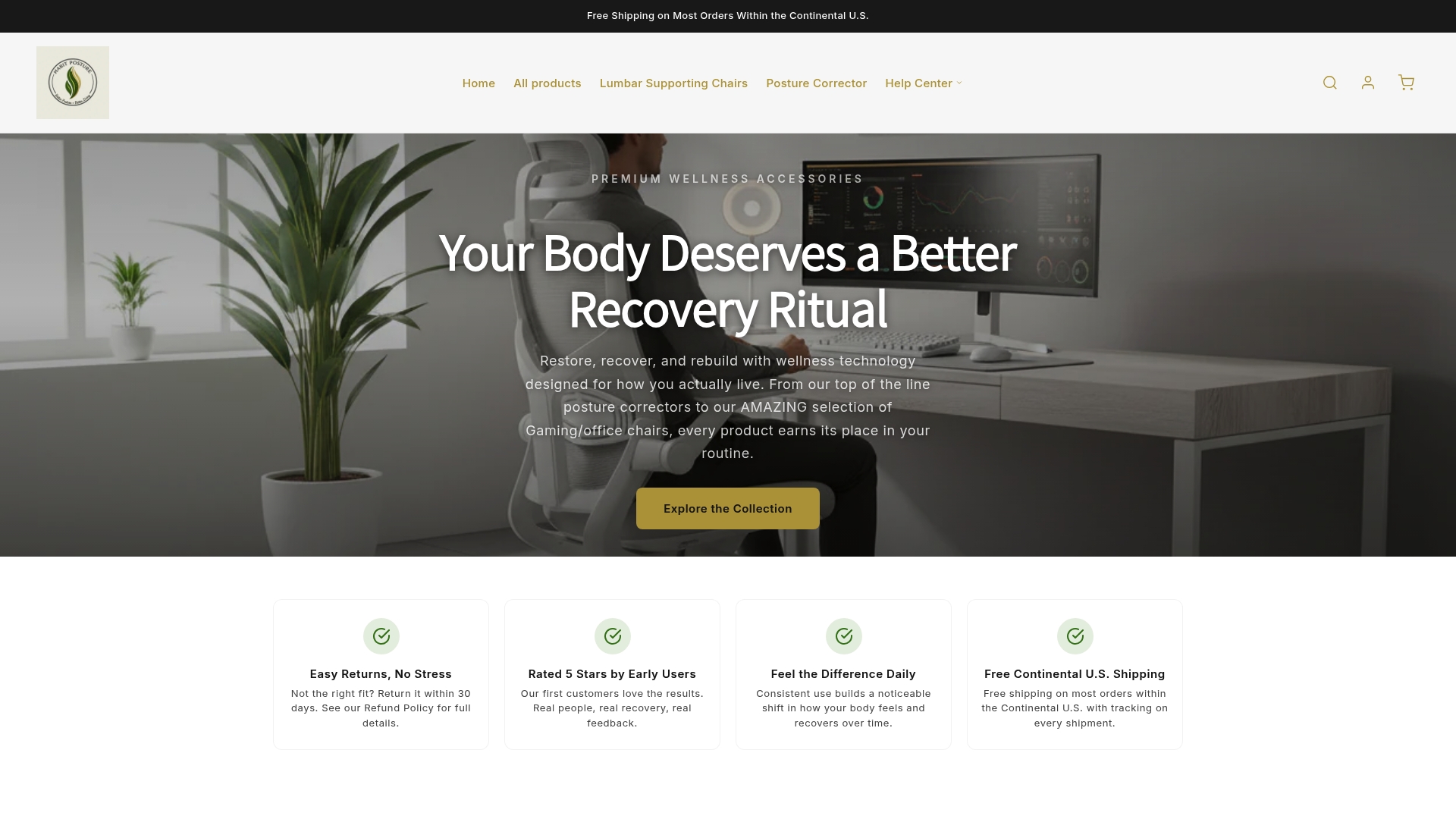
Whether you are grinding through back-to-back Zoom calls or deep in a six-hour gaming session, Habitposture’s posture correctors, adjustable back braces, and high-back ergonomic chairs are built to work alongside your awareness training, not replace it. Slip one on during your next focused work block, notice the difference in how your shoulders and neck feel, and use that feeling as your new baseline.
Browse the full Habitposture collection at habitposture.com and find the support that fits your setup and your goals.
Useful sources for further reading
- Postural awareness and its relation to pain: validation of an innovative instrument measuring awareness of body posture in patients with chronic pain
- Posture and back health
- Posture: What It Is & Why It Matters for Your Health
- Guide to good posture | MedlinePlus
- Good Posture: How to Improve It and Its Benefits | USAHS